
Application Note
The CellXpress.ai Automated Cell Culture System for automated, robust brain organoid generation
- Enhanced consistency. Feeding organoids automatically means they’re cared for on a set schedule, even on weekends and holidays. That consistency not only reduces human error but also leads to more reliable downstream assays.
- Decreased cross-contamination risk. No mix-up of media or mishandling of plates. Automated handling keeps every step standardized and secure.
- Decreased contamination risk. Built-in H2O2 decontamination system for the incubator and Hepa filtered positive pressure inside the liquid handling cabinet to prevent contamination of samples.
- Effective time management. Increased hands-off time enables scientists to focus on more critical tasks while accelerating their research and development timelines.
- Imaging becomes reliable and repeatable. Automated imaging systems take care of the routine image acquisition, and deep learning-based analysis enables rigorous quality control and monitoring.
- Integration with external instruments. Compatibility with image acquisition and analysis tools engenders end-to-end iPSC culture automation to advance neurodegenerative disease modelling.
Felix Spira, PhD | Sr. Manager, Hardware Engineering and Applications | Molecular Devices, LLC
Sandra Grund-Gröschke, PhD | 3D Application Scientist | Molecular Devices, LLC
Introduction
Neurological diseases such as Alzheimer’s and Parkinson’s remain a major global health challenge. Despite significant investment in drug discovery and development pipelines, progress has been hindered by several bottlenecks. One fundamental challenge was the lack of reliable in vitro and in vivo models to guide compound screening and lead optimization accurately. Traditional workflows with cell lines and animal tests often do not recapitulate the complexity of the human brain and its disorders. This changed with the development of the first brain organoid model in 2014 by Lancaster et al.1 Brain organoids are complex 3D miniaturized models of parts of the human brain that are derived from human induced pluripotent stem cells (iPSCs). Unlike traditional 2D cultures, brain organoids contain multiple cell types that interact with each other and recapitulate the architecture and structure of real tissue. This complexity makes them superior models to study brain development and diseases. Protocols for brain organoid generation have significantly advanced in recent years, establishing these models as essential tools in drug discovery, disease modeling, and personalized medicine.2
Despite this progress, the translation of brain organoids into tools for drug development continues to face challenges because of poor reproducibility and complex, labor-intensive protocols that hinder scalability. Although differentiation protocols from induced pluripotent stem cells (iPSCs) into brain organoids vary across model systems, they typically require media exchange over several months, together with continuous monitoring. This lengthy cultivation process contributes to high variability between wells and plates, which remains a major limitation.
The CellXpress.ai® Automated Cell Culture System is designed to overcome these challenges. The system combines a liquid handler, imager, and incubator into a unified platform, allowing for seeding, feeding, passage, and monitoring both 2D and 3D cell cultures (Figures 1 and 2).
Variability can be reduced by optimizing the liquid handling steps of CellXpress.ai, thereby reducing contamination risk and minimizing organoid loss or damage during media aspiration and dispensing. The “Smart Media Module” of the system significantly enhances hands-off time by allowing on-deck reagent storage for multiple days. In addition, those media modules will pre-heat the media in advance to ensure the media is at the allocated temperature once feeding starts and is kept at this temperature until all plates are processed. Media is automatically cooled down after the feeding event for on-deck media storage (Figure 1). In addition to media containers, reservoir plates can also be stored on deck.
The CellXpress.ai Automated Cell Culture System can integrate a rocking incubator to enable the cultivation of free-floating organoids, such as brain organoids, by providing continuous media agitation during the entire maturation process. This rocking incubator can hold up to six racks with a mix-and-match configuration that allows both static and rocking conditions. Thereby, stem cells can be cultivated in the same incubator as the brain organoids. This feature is key to providing an end-to-end workflow for the entire process of brain organoid generation. Furthermore, the CellXpress.ai system allows constant monitoring of the culture via its built-in imager and utilizes machine learning-assisted image analysis via the incorporation of the IN Carta® Image Analysis Software.
In this application note, we describe the automated brain organoid generation workflow using the CellXpress.ai system, starting from iPSCs up to differentiation and maturation of complex brain organoids (Figure 2). For stem cell cultivation, single-cell or fragment passaging methods were established. For differentiation of stem cells into brain organoids, the starting material is critical. Stem cells should exhibit healthy, non-differentiated colonies. To control the stem cell quality, we deployed the IN Carta image analysis software, which utilizes advanced artificial intelligence and enables colony segmentation to distinguish between healthy and differentiated colonies. We implement a workflow to generate brain organoids using a rocker instead of the classically used orbital shaker. Organoid quality was assessed via functional assays and whole-mount staining. We also demonstrated the seamless integration of external devices, such as the ImageXpress® Confocal HT.ai High Content Imaging System, for advanced monitoring by utilizing the CellXpress.ai system’s back port.
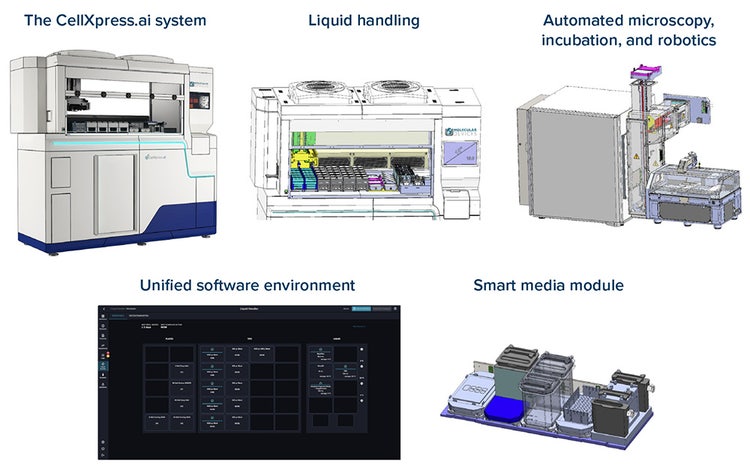
Figure 1. The CellXpress.ai system’s built-in hardware and software.
Methods
iPSCs cultivation
The human induced pluripotent stem cell (iPSC) line WTC-11 (Gm25256, Coriell Institute for Medical Research) was used to generate brain organoids. Fragment passaging was performed according to the protocol described in the application note Automation of iPSC culture, passaging, and expansion with the CellXpress.ai Automated Cell Culture System. For the generation of brain organoids, iPSCs were single-passaged using TrypLE and seeded into 96-well U-bottom plates.
Cerebral organoids
For the generation of cerebral organoids, the StemCell Technologies kit (Catalog #08570) was used as described in the protocol. For maturation, plates were either placed on an orbital shaker or a rocker for comparison.
Forebrain organoids
Forebrain organoids were generated in a 96-well U-bottom plate (Greiner, Kremsmünster, DE). On day 12, organoids were either transferred into 6w ultra-low attachment plates (Greiner, Kremsmünster, DE) or further cultivated in 96-well U-bottom plates. For maturation, plates were either placed on an orbital shaker or a rocker for comparison.
Midbrain organoids
Midbrain generation was performed according to Renner et al. (2021).3
Image analysis
The IN Carta image analysis software, which utilized a machine learning-based protocol, was used to segment undifferentiated and differentiated iPSC colonies. Based on image analysis, decision-making rules were set in the protocol to enable both automated iPSC culture passaging and to exclude wells where differentiation was present.
Cell characterization
For quality control of iPSC colonies, those were fixed with 4% paraformaldehyde and stained for pluripotency markers.
Functional activity of brain organoids was measured by assessing the calcium flux using the FLIPR® Calcium 6 Assay Kit (Molecular Devices) according to the manufacturer’s protocol.
For quality control of organoids, whole-mount staining was performed according to the protocol published by Renner et al.4 In short, organoids were first cleared by using benzyl alcohol and benzyl benzoate. After successful clearing, the organoids were stained. High-content imaging was performed using the ImageXpress HT.ai system.
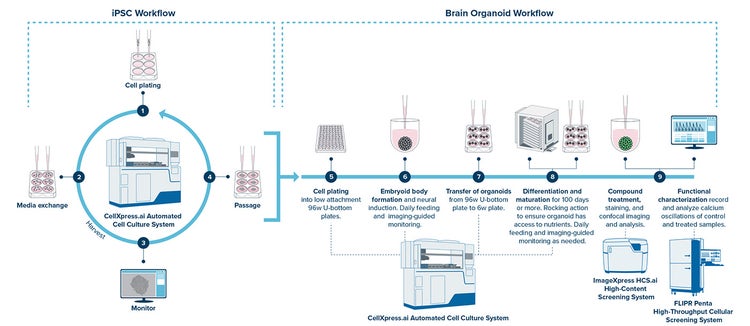
Figure 2. The CellXpress.ai system supports cultivation of both human iPSCs and brain organoids.
Results
Automated stem cell cultivation
For the generation of brain organoids, the quality of the starting material is critical, meaning that high-quality stem cells are required to generate high-quality brain organoids. By using the CellXpress.ai system, we were able to maintain human iPSC cultures for several passages. Here, consistent growth of stem cell colonies could be observed by continuous increase in cell numbers and confluency (Fig. 3A). For cultivation of stem cells on the CellXpress.ai system, single-cell and fragment passaging protocols were established (Fig. 3B). Here, passaging could be automatically triggered by decision-making when confluence reaches a certain threshold.
The compatibility of the CellXpress.ai system with the IN Carta image analysis software facilitated the implementation of deep learning for colony segmentation to discriminate between healthy (Fig. 3C) and differentiated cells (Fig. 3D). Using those established protocols, we were able to show constant growth of human iPSCs, which we verified over several plates (Fig. 3E).
iPSCs differentiation into brain organoids
The CellXpress.ai system software possesses several protocol phases, which can be combined as needed to set up a protocol. These phases include feeding, imaging, seeding, and passaging. By using the various features of the CellXpress.ai system, we were able to establish a brain organoid generation workflow. This protocol includes seeding of iPSC into 96-well U-bottom plates and regular feeding and image acquisition cycles of 96-well and 6-well plates (Figure 4A). Thus, the CellXpress.ai system increases walkaway time by performing error-prone and repetitive tasks during organoid development with unparalleled precision. The built-in CellXpress.ai system imager allows fast and full-well acquisition of 96-well and 6-well plates. Thereby, every organoid can be monitored in high resolution, providing important details such as budding of organoids (Fig. 4B–C).
For the successful maturation of brain organoids, it is critical to keep the organoids in motion, because these organoids are incredibly hungry and need a constant flow of nutrients and oxygen. Although standard protocols involve an orbital shaker, their automation remains a challenge. However, there are automated solutions that involve a rocker. Here, we aimed to test whether organoids grown on a rocker are comparable to those grown on a shaker (Figure 4D). We were able to successfully grow cerebral organoids on a rocker and those showed characteristic features such as budding of the organoid surface around day 10 (Fig. 4E). We compared the area of organoids grown on a shaker and rocker after 48 days of culture and observed no difference (Fig. 4E).
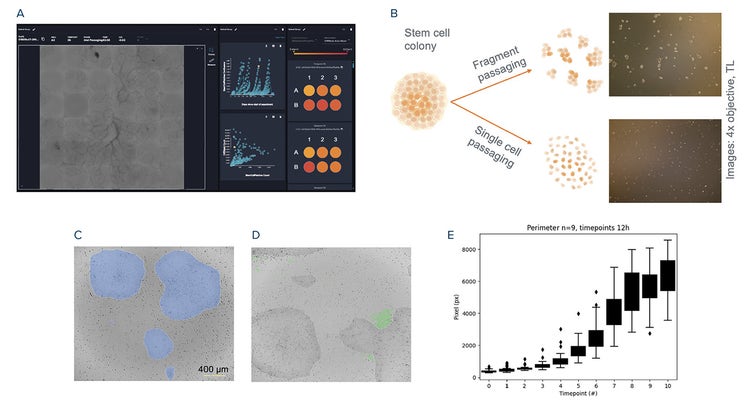
Figure 3. Automated stem cell culture. (A) The CellXpress.ai system user software showing stem cell cultivation workflow. (B) Different passaging methods built into the CellXpress.ai system. (C, D) Deep learning for colony segmentation to discriminate between healthy colonies (C) and differentiated cells (D). (E) Quantification of colony growth monitored over 6 days. Boxplots show the average of 9 plates.
High-resolution image acquisition of brain organoids
Combining the automation capabilities of the CellXpress.ai system with the imaging prowess of ImageXpress HT.ai system facilitated the acquisition of high-resolution images of brain organoids. The ImageXpress HT.ai system maintains high resolution and image quality in different levels of magnification, enabling both a holistic view of the organoid and a detailed view of regions, with cortical layers clearly visible (Figure 5A-D). The multiple modes of imaging collectively substantiate the viability and functionality of the neurons in the brain organoids.
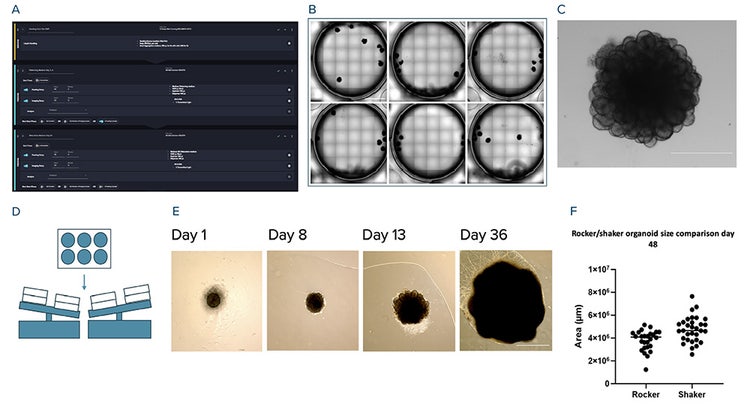
Figure 4. Differentiation of human iPSC into brain organoids. (A) Image showing protocol setup in the CellXpress.ai system user software (B) Representative images of stitched full-well acquisition of the 6-well plate. (C) Enlarged organoid of C. (D) Cartoon of the cultivation of brain organoids on a rocker. (E) Representative single images of organoids over 36 days. (F) Quantification of organoid sizes of organoids cultivated on a rocker and shaker. Scale Bars B: 10 mm, D: 20 μm, C and F: 600 μm; Objective 2x air CellXpress.ai built-in microscope (B, C), 4x Evos (F).
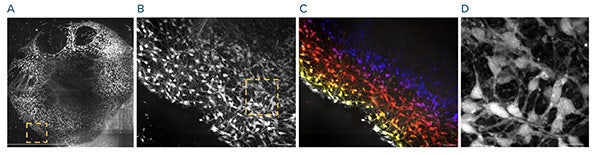
Figure 5. High-resolution image acquisition. Exemplary images of brain organoids. (A) Stitched max projection of high-resolution image, 6x6 tiling, 200 z-planes – 2 μm distance between planes. (B) Zoom into the region indicated in A. (C) Spatial colored projection of region indicated in A to show cortical layers. (D) Zoom into the region indicated in B. Scale bar: A: 1mm, B–D: 20 μm; A-D: Objective 20x water immersion on the ImageXpress HT.ai system.
Analysis of cerebral organoids
Functional activity of the cerebral organoids was determined using the Calcium 6 Assay kit to track changes in intracellular calcium concentration over time, which reflects neuronal activity. To measure neuronal activity, the stream acquisition function of the ImageXpress HT.ai system was used, which revealed the generation of functionally active brain organoids. (Figures 6A–F)
Midbrain organoid generation on the CellXpress.ai system
Using the CellXpress.ai system, we established an automated midbrain generation workflow (Figure 7A). Growth of midbrains was tracked over time displays using the system’s integrated cell journey feature (Figure 7B). For quality control of midbrain organoids, we performed whole-mount staining and calcium imaging. For wholemount staining of midbrain organoids, we performed optical clearing for enhanced light penetration (Figure 7C). After successful clearing, the organoids were stained with fluorescence antibodies, and imaging was performed using the high-content ImageXpress HT.ai system. Whole-mount staining with immunofluorescence markers yields high-quality images of midbrain organoids, clearly depicting morphological and phenotypical features (Figure 7D). In addition, calcium-stained midbrain organoids were monitored, and single neurons selected from four different regions of the organoid were traced for neuronal activity, demonstrating functionality throughout the midbrain organoid (Figure 7E).
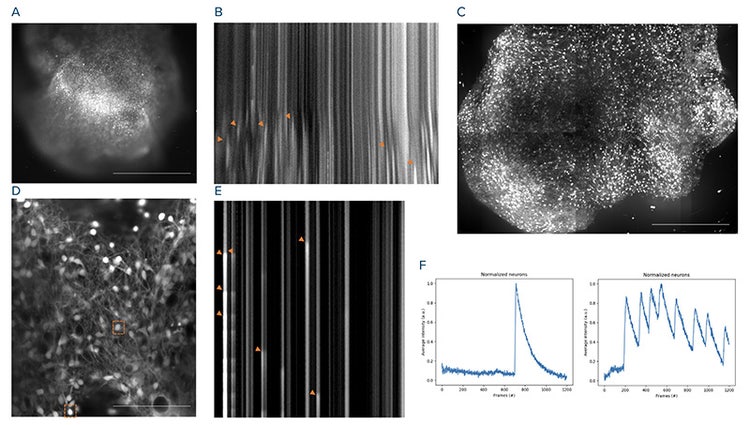
Figure 6. Image acquisition and analysis. (A) Stream acquisition of a calcium-stained brain organoid. (B) Kymograph of A indicating calcium activity. (C) Max projection of high-resolution Z-stack of organoid A. (D) High-resolution stream acquisition of neuronal network of organoid in C. (E) Kymograph of neuronal network of D. (F) Single neuronal traces of D, neurons are indicated by orange boxes. A, B: 4x objective build in the CellXpress.ai system’s automated microscope, 70 ms framerate. C–E: The ImageXpress HT.ai system 20x water immersion. D-F: Step-size 2 μm, frame rate 20 ms. Scale bar A, C = 1 mm, D = 10 μm
Phenotypic classification of brain organoids
Understanding organoid phenotype is critical to differentiate between “good” and “bad” organoids. Hereby, excluding those organoids that show unwanted phenotypes from further processing, such as feeding and imaging, will in turn reduce waste of expensive media and time. The phenoglyphs tool of the IN Carta software allows phenotypic classification of brain organoids. (Figure 8A). While classification can be performed manually, the IN Carta software deep learning algorithm can be implemented to accelerate the process. The confusion matrix in Figure 8B reveals a consistent match between manually determined and automatically annotated phenotypic labels, highlighting the utility of the IN Carta software in automated brain organoid expansion workflows.
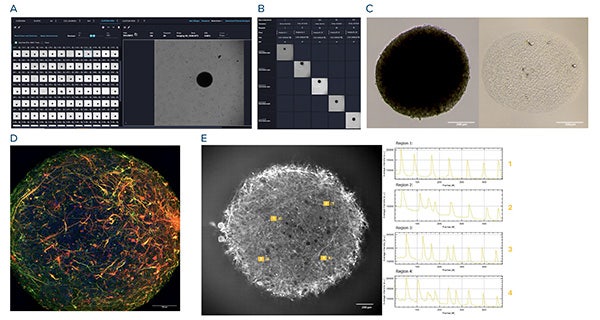
Figure 7. Midbrain generation on the CellXpress.ai system. (A) User software showing midbrain organoids cultivated on the CellXpress.ai system. (B) Cell journey to follow individual organoids over time. (C) Pre and post-clearing images. (D) Maximum projection of a whole-mount stain of a cleared midbrain organoid. (E) Stream acquisition of a calcium-stained midbrain, including single neuronal traces for four regions (1–4). A, B: The CellXpress.ai system’s built-in microscope, 4x air objective. C: Evos XL 10x air objective, D, E: The ImageXpress HT.ai system 20x water immersion objective.
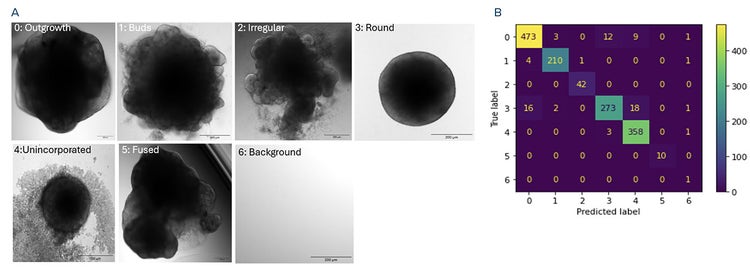
Figure 8. (A) Representative images of classes used for organoid classification. (B) Confusion matrix between automatically-annotated dataset and the ground truth dataset. Objective 4x air; Scale bars: 200 μm
Conclusion
This application note demonstrates that brain organoids generated using the CellXpress.ai Automated Cell Culture System are comparable in size and neuronal activity to those produced manually. The system successfully supported the simultaneous cultivation of iPSC lines, free-floating brain organoids in 6-well plates, and single organoids in 96-well plates. The built-in imaging system enabled automated image acquisition across different plate formats and model systems, followed by reliable, label-free image segmentation and classification tailored to each model.
This fully integrated, end-to-end solution highlights the feasibility of scalable, robust, and high-throughput brain organoid production, from healthy stem cells to mature, functional brain organoids, within a single automated platform.
References
- Lancaster MA, Knoblich JA. Generation of cerebral organoids from human pluripotent stem cells. Nat Protoc 2014;9(10):2329–2340.
- Birtele M, Lancaster M, Quadrato G. Modelling human brain development and disease with organoids. Nature Reviews Molecular Cell Biology 2025;26(5):389–412.
- Renner H, Grabos M, Schöler HR, Bruder JM. Generation and maintenance of homogeneous human midbrain organoids. Bio-protocol 2021;11(11):e4049–e4049.
- Renner H, Otto M, Grabos M, Schöler HR, Bruder JM. Fluorescencebased single-cell analysis of whole-mount-stained and cleared microtissues and organoids for high throughput screening. Bio-protocol 2021;11(12):e4050–e4050.