Preparing Labs for the Organoid Era
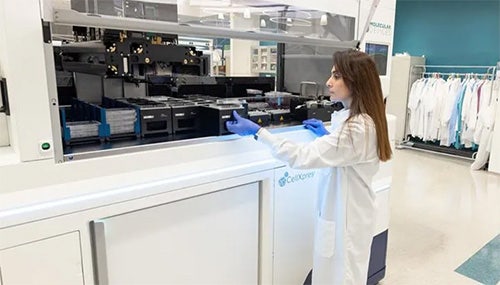
Molecular Devices’ Cellular Automation Workflow expert Shawn Alvarado, PhD, shares practical guidance for lab leaders navigating the shift to human‑relevant 3D models.
Key Insights
- Workforce limitations are the biggest barrier to organoid adoption. Training scientists to reliably culture 3D models is time‑intensive, and turnover can disrupt months of work, making consistency and knowledge retention critical.
- Value matters more than cost when evaluating 3D biology. While organoid workflows may appear more expensive than 2D culture, their predictive power can reduce downstream costs by minimizing animal studies and improving clinical relevance.
- Automation should be treated as core lab infrastructure. Modern, biologist‑designed automation helps preserve institutional expertise, improve reproducibility, and enable labs to scale organoid workflows despite staffing challenges.
- Quality control becomes more complex as organoids scale. Variability, lot control, and batch consistency require greater rigor in 3D systems than traditional 2D culture models.
Summary
As organoid and other human‑relevant models gain momentum, lab leaders face a new set of operational and strategic decisions. In this article, Shawn Alvarado, PhD, National Sales and Applications Manager for Cellular Workflow Automation at Molecular Devices, explains why the transition to 3D biology is less about acquiring new tools and more about rethinking how labs manage people, processes, and data.
Shawn highlights workforce constraints as the most pressing challenge, noting that the specialized skills required for organoid culture make reproducibility and continuity difficult when experienced staff leave. She emphasizes the importance of shifting from cost‑based comparisons to value‑based assessments, where the downstream benefits of more predictive models can outweigh higher upfront expenses. Automation, she points out, plays a foundational role by embedding best practices into reproducible workflows and enabling labs to scale without sacrificing quality. Together, these considerations help position labs to succeed as organoid research becomes an increasingly central part of drug discovery and translational science.
Read the Full Article
This summary is based on insights from Molecular Devices’ Shawn Alvarado, PhD., as featured in the Lab Manager article, “Preparing Your Lab for the Organoid Era: Key Considerations for Lab Leaders.”