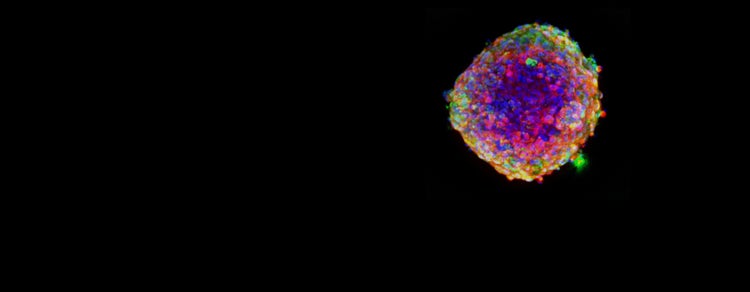
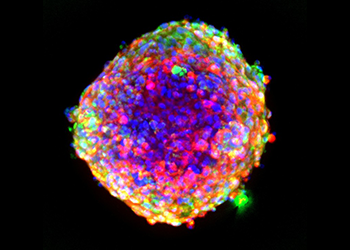
3D Ready Cardioid Supplement Kits
Multicellular 3D Cardioid models for preclinical safety and toxicity research
Elevate cardiac safety and toxicity screening with scalable, reproducible multi-cellular cardioid models that deliver human-relevant data to accelerate safer therapies
The 3D Ready™ Cardioid Supplement Kits empower researchers to elevate cardiac toxicity screening with physiologically relevant 3D models. Designed to support the generation and maintenance of iPSC-derived complex cardiac models, the kits enable the production of either cardiomyocyte-only or tri-lineage cardioids. These models are well suited for chronic toxicity and long-term functional cardiac studies and can be generated using either automated or manual cell culture workflows. By simplifying workflows and ensuring reproducible quality, the kits accelerate safer, more effective therapies while supporting ethical and fundable research beyond animal models.

Understand compound toxicity better
Generate physiologically relevant cardiac organoids that better reflect human heart biology for deeper safety cardiotoxicity insights.

Integrated iPSC workflows
Combine protocol-recommended base media with our cardioid supplements for iPSC pre-culture and differentiation steps into one streamlined workflow.

Simplify reproducible production of cardioids
Media supplement kit containing all key reagents and growth factors paired with our robust protocol ensures ease, reproducibility, and quality in producing cardioids.
Features
Complex cardioids that mimic heart architecture
Produce complex 3D cardiac models, containing either only cardiomyocytes only, or containing three cardiac cell lineages (cardiomyocytes, cardiac fibroblasts and cardiac endothelium), that self-organize into chambered cardioids.
iPSC cardiomyocyte support
Support iPSC cardiomyocyte workflows alongside organoid models for scalable screening and validation.
Controlled differentiation of iPSCs to Cardiac cell types
Optimised, validated and simplified media supplement kits ensure consistent and reproducible cardiac differentiation and cardioid formation from iPSCs.
Simultaneous differentiation in one system
Cardiac cell types co-develop in one system - no need to separately pre-differentiate cells and assemble into cardioids.
Organoid culture media
Enable reliable 3D cardiac organoid formation with pre-optimized organoid culture media systems.
Support Cardiac Safety and Toxicity Studies
Apply complex cardiac organoids to better understand safety and toxicity mechanisms through structural and functional analysis.
Transition from 2D Cell Culture to Cardioid Models
Move from cardiomyocyte screening to advanced organoid models within a unified experimental workflow.
Latest Resources
Featured Applications
FAQs
How do cardiac organoids improve drug discovery?
Cardiac organoids, also known as cardioids, improve drug discovery by providing a more physiologically relevant model of human heart tissue than traditional 2D cell cultures. Derived from human induced pluripotent stem cells (iPSCs), these 3D cardiac models enable researchers to evaluate drug efficacy, cardiac safety, and disease-relevant biological responses in an environment that more closely reflects native heart tissue.
Because cardiac organoids capture complex cellular interactions and functional characteristics that are difficult to reproduce in conventional in vitro models, researchers can generate more predictive data earlier in the drug development process.
Can cardiac organoids be generated from human iPSCs?
Yes. Cardiac organoids are commonly generated from human induced pluripotent stem cells (iPSCs), enabling researchers to create physiologically relevant 3D cardiac models for cardiovascular research. Using iPSC-derived cardioids allows scientists to investigate drug responses, disease mechanisms, and cardiac function in a controlled environment.
Can cardiac organoids be analyzed using high-content imaging?
Yes. High-content imaging can be used to assess morphological, structural, and phenotypic characteristics of cardiac organoids. Imaging-based approaches enable researchers to evaluate responses to compounds and monitor changes in organoid development and function over time.
How does automation improve cardiac organoid research?
Automation can help standardize cell culture processes, reduce manual variability, improve reproducibility, and support the generation of larger numbers of cardiac organoids for research and screening applications.
Why is reproducibility important in cardiac organoid workflows?
Reproducibility is critical for generating consistent data across experiments, researchers, and study sites. Standardized workflows and validated culture systems help reduce variability and improve confidence in research outcomes.
What technologies can be integrated into a complete cardiac organoid workflow?
Cardiac organoid workflows can incorporate tools for cell culture, imaging, functional analysis, and data analysis. Combining these technologies enables researchers to generate, characterize, and analyze cardiac organoids throughout the research process.
What iPSC cell lines can be used for cardioid generation with the 3D Ready Cardioid Supplement Kits?
The 3D Ready Cardioid Supplement Kits are designed to support cardioid generation from a wide range of human iPSC lines. To help ensure consistent performance and reproducibility, we recommend starting with a protocol-validated cell line, such as GM25256 from the Coriell Institute and StemRNA™ SK014 from REPROCELL. Using a validated iPSC line can help streamline assay setup and minimize variability when establishing your cardioid generation workflow.
How are cardiac organoids used in cardiac safety research?
Cardiac organoids, also known as cardioids, are used in cardiac safety research because they provide a more physiologically relevant model of human heart tissue than traditional 2D cell cultures. Derived from human induced pluripotent stem cells (iPSCs), these three-dimensional cardiac models can be used to evaluate compound responses and study cardiac biology in an environment that more closely reflects native heart tissue.
By supporting complex cellular interactions and functional characteristics that are difficult to replicate in conventional in vitro systems, cardiac organoids help researchers generate data that may inform preclinical cardiac safety assessment and toxicity research workflows.
Customer Breakthrough
Cardiac organoid applications for cardiotoxicity and cardiac safety assays
Use cardiac organoids and iPSC cardiomyocyte workflows to improve cardiotoxicity, cardiac safety, and differentiation studies.