Connecting data across drug discovery workflows
How automation, AI, and integrated platforms are helping labs turn complex biological data into actionable insight.
Key insights
- Drug discovery teams are moving away from isolated instruments toward connected, end‑to‑end workflows that improve data flow, traceability, and reproducibility.
- Automation and AI are shifting earlier into biological workflows, particularly in cell culture and imaging, to reduce manual variability and reliance on individual expertise.
- High‑quality experimental data remains essential as AI adoption increases, reinforcing the need for robust, validated analytical methods across discovery and development.
Summary
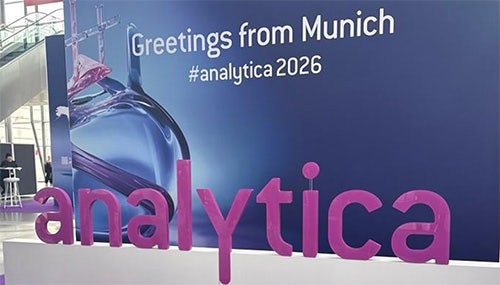
In a feature from Drug Target Review following Analytica 2026, Boyd Butler, Global Product Marketing Manager for Imaging at Molecular Devices, discusses how labs are addressing one of drug discovery’s biggest challenges: connecting data across increasingly complex workflows.
Butler highlights cell culture as a persistent bottleneck, with many workflows still relying on manual processes performed by individual scientists. At Analytica, Molecular Devices showcased an end‑to‑end approach that links automated cell culture, high-content imaging, and AI‑driven analysis. By combining imaging with machine learning, researchers can define what healthy cells or organoids should look like, guide differentiation, and apply consistent protocols across experiments without the need for coding.
This approach helps standardize workflows, preserve institutional knowledge, and support shared and multi‑user lab environments. As Butler explains, making systems easier to learn and operate allows teams to scale experiments more reliably while reducing variability. The broader message from Analytica reinforces that as data volumes grow and modalities become more complex, the value of technology increasingly depends on how well tools work together to move scientists from data generation to confident decision‑making.
Read the Full Article
This summary is based on insights from Molecular Devices’ Boyd Butler, Global Product Marketing Manager for Imaging, as featured in the Drug Target Review article, “Analytica 2026: Connecting data across drug discovery workflows.”