
HeartBeat.bio Scales Cardioid Screening with the CellXpress.ai Automated Cell Culture System
COMPANY/UNIVERSITY
HeartBeat.bio AG
TEAM MEMBERS
Lokesh Pimpale
Hannah Keresztes
Rebecca Kresnik
Abhijeet Krishna
Ruben van Helden
Pablo Hofbauer
Florian Fuchs
PRODUCTS USED
CellXpress.ai Automated Cell Culture System
ImageXpress HCS.ai High-Content Screening System
FLIPR Penta High-Throughput Cellular Screening System
The Challenge
Heart failure remains one of medicine’s toughest challenges, driving the need for faster, more predictive drug discovery. To help close this innovation gap, HeartBeat.bio is combining human-relevant, iPSC-derived Cardioid models (Cardioids) with AI-driven analysis and advanced automation. This approach is designed to make drug discovery faster, more predictive, and more cost-efficient, helping accelerate the path to breakthrough therapies that improve clinical success and enhance patient outcomes.
As HeartBeat.bio expanded its cardiovascular research programs, scaling Cardioid production became a significant challenge. The Cardioids must not only be physiologically relevant but also highly standardized and reproducible at scale to support screening programs.
Manually generating, feeding, monitoring, and passaging Cardioids is labor-intensive, difficult to sustain around the clock, and introduces batch-to-batch and operator-to-operator variability that could affect downstream screening results. The team needed a way to produce Cardioids at scale while maintaining the consistency required for confident drug discovery.
HeartBeat.bio AG is a pioneering TechBio company transforming cardiac drug discovery through its next-generation Cardioid Drug Discovery Platform. The proprietary platform combines iPSC-derived cardiac organoids with advanced automation and AI-driven analytics to enable scalable, human-centric drug discovery.
The Solution
HeartBeat.bio implemented the CellXpress.ai® Automated Cell Culture System to automate and standardize its Cardioid workflows. The system integrates incubation, liquid handling, imaging, and AI-driven decision-making into a single platform, enabling continuous 24/7 operation, automated culture maintenance, and workflow traceability.
By automating established protocols, HeartBeat.bio transformed a complex, time-consuming, and manual process into a scalable screening platform that produced consistent, reproducible cell models.
The CellXpress.ai system now supports the entire cell culture workflow - from Cardioid formation in 384-well plates through culture maintenance, drug treatment, and monitoring. The addition of the ImageXpress® Confocal High-Content Imaging System and the FLIPR High-Throughput Cellular Screening System has resulted in an end-to-end Cardioid screening workflow, with an integrated setup enabling automated mid-assay and endpoint readouts – ultimately enabling high-throughput Cardioid screening.
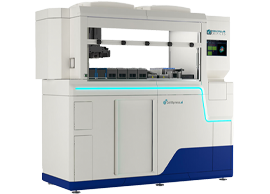
CellXpress.ai Automated Cell Culture System
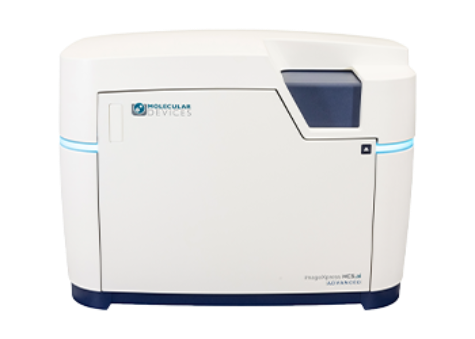
ImageXpress HCS.ai High-Content Screening System
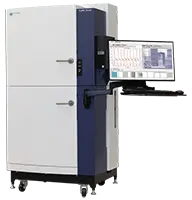
FLIPR Penta High-Throughput Cellular Screening System
Products Used
CellXpress.ai Automated Cell Culture System, ImageXpress HCS.ai High-Content Screening System and FLIPR Penta High-Throughput Cellular Screening System
The Results
With the CellXpress.ai system in place, HeartBeat.bio can now run Cardioid production and screening at the scale, consistency, and reliability required for drug discovery. What was once a manual, labor-intensive workflow has become a standardized, automated, and high-throughput screening operation.
The CellXpress.ai solution enables HeartBeat.bio to generate and maintain up to 50,000 Cardioids per month. HeartBeat.bio typically runs multiple batches in parallel, maintaining around 75 plates in active culture at a given time. This flexible batching strategy allows capacity to scale with ongoing projects and research requirements.
By automating routine culture tasks and maintaining consistent workflows around the clock, the CellXpress.ai system helps reduce operator-dependent variability and supports greater reproducibility across Cardioid production and screening. The result is greater confidence in screening data, improved operational efficiency, and an enhanced ability to identify promising therapies earlier, helping accelerate the development of treatments that can improve patient outcomes.
For further information, please visit www.heartbeat.bio or follow us on LinkedIn.