APPLICATION NOTE
AI-Driven 3D Segmentation and Drug Toxicity Screening Using Human Liver Microtissues
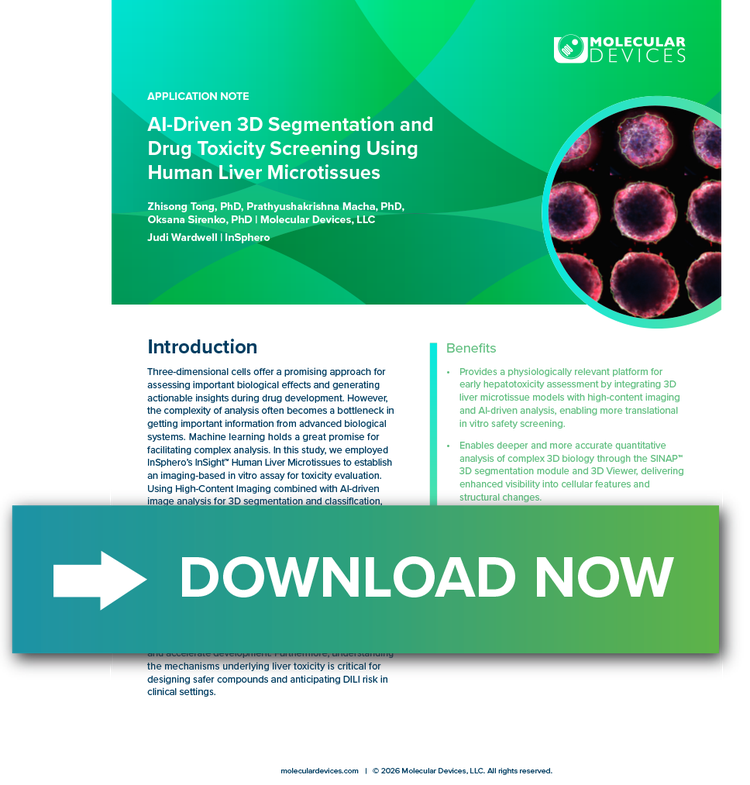
Discover how AI-powered 3D imaging reveals early signs of drug-induced liver toxicity using human-relevant tissue models.
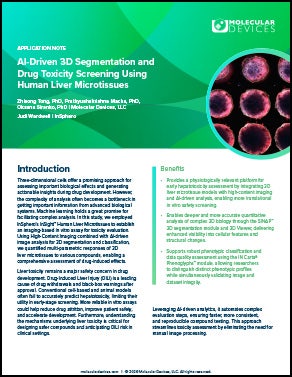
In this application note, high-content imaging combined with IN Carta® Image Analysis Software enables automated, AI-driven analysis of 3D human liver microtissues to improve early hepatotoxicity assessment.
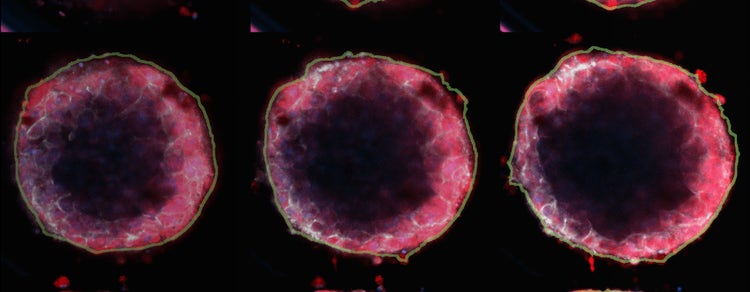
This advanced approach moves beyond traditional 2D cell cultures by analyzing intact 3D liver microtissues, providing a more physiologically relevant view of drug-induced structural and cellular changes.
By training deep learning segmentation models on 3D image data, researchers can automatically identify and quantify complex tissue morphology and internal features across multiple cellular markers. Machine learning–based classification further distinguishes healthy, damaged, and non-viable microtissues—delivering objective, reproducible toxicity readouts without manual image processing.
The result is a scalable, automated screening workflow that delivers deeper biological insight, improves data quality, and enables faster, more confident decisions in early drug safety evaluation.