Molecular Devices Expert Highlights the Role of Automation and AI in Scaling Organoid Workflows
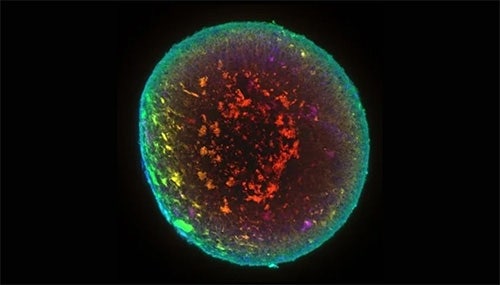
Vicky Marsh Durban, PhD, Director, Human Relevant Models at Molecular Devices, shares insights in News Medical Life Sciences on how automation and AI are enabling more scalable, reproducible organoid workflows. The article explores why these capabilities are critical for advancing human-relevant models and accelerating drug discovery.
Key Insights
- Scaling complexity in 3D biology: Organoid models offer more physiologically relevant insights but are often difficult to standardize, scale, and reproduce using traditional manual techniques.
- Automation as a critical enabler: Integrating automated systems helps reduce variability, streamline workflows, and support higher-throughput experimentation across labs.
- AI-driven analytics enhance insight: Advanced imaging and AI tools allow researchers to extract meaningful data from complex biological systems, improving decision-making in drug discovery.
- Advancing human-relevant models: The shift toward organoids and other 3D systems is helping improve the predictive power of preclinical research and reduce reliance on less representative models.
Summary
In News Medical Life Sciences, Vicky Marsh Durban, PhD, Director, Human Relevant Models at Molecular Devices, discusses how automation and AI are transforming the use of organoids in drug discovery workflows. As organoids become increasingly important for modeling human biology, researchers face challenges in scaling these complex systems due to variability and labor-intensive processes.
Dr. Marsh Durban explains that automation plays a critical role in addressing these challenges by standardizing key steps such as culture, handling, and assay execution. This reduces manual intervention and helps ensure more consistent and reproducible results across experiments.
The article also highlights the importance of integrating advanced imaging and AI-driven data analysis tools. These technologies enable researchers to manage the complexity of 3D cell models more effectively, extract deeper biological insights, and analyze results at scale.
By combining automation with AI, laboratories can streamline end-to-end workflows and increase throughput without compromising quality. This approach supports more efficient drug discovery by improving the reliability and relevance of experimental data. Ultimately, these advancements are helping researchers adopt more predictive, human-relevant models that can accelerate the development of safer and more effective therapies.
Read the Full Article
This summary is based on coverage by News Medical Life Sciences. Read “Scaling organoid workflows with automation and AI for drug discovery” in News Medical Life Sciences.