What Will It Take for Organoids To Become a Routine Research Tool?
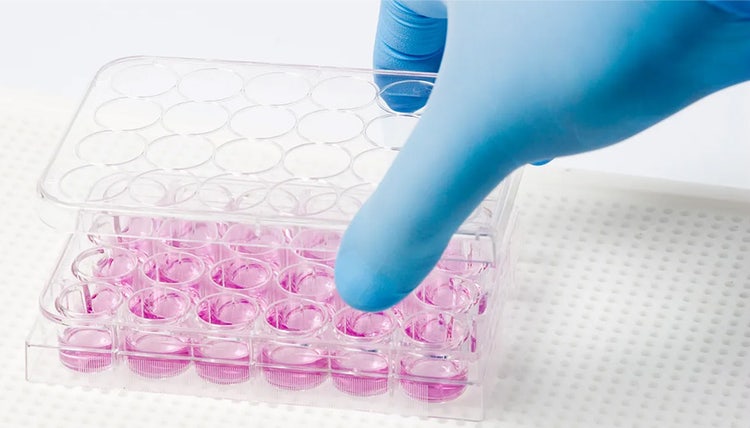
In a recent Technology Networks article, Victoria Marsh Durban, PhD, Director of Human Relevant Models at Molecular Devices, discusses what it will take for organoids to become a more routine part of research. She highlights how greater standardization and automation can help researchers address persistent challenges with reproducibility, scalability, and complex organoid workflows.
Key Insights
- Reproducibility remains a key challenge: Organoids can more closely reflect aspects of human biology than conventional models, but variability in how they are cultured and handled can make it difficult to generate consistent, reproducible results.
- Automation can bring greater consistency: Automating repetitive and technically demanding steps can reduce manual variability and help researchers establish more standardized workflows.
- Scaling organoid research requires an end-to-end approach: Moving beyond small-scale experiments depends on the ability to efficiently culture, monitor, image and analyze complex 3D models across the workflow.
- More robust workflows can broaden the use of human-relevant models: Improving consistency and scalability can help make organoids more practical for a wider range of research and drug discovery applications.
Summary
Organoids offer researchers an opportunity to study complex biology in models that more closely reflect human physiology, but their broader adoption depends on overcoming practical challenges in culture, reproducibility, and scale. Victoria Marsh Durban, PhD, explains that automation can help address these barriers by creating more standardized workflows and reducing the variability introduced by labor-intensive manual processes.
As organoid research matures, the focus is increasingly shifting from whether these models can provide valuable biological insights to how laboratories can use them reliably and at greater scale. More consistent workflows spanning organoid culture, monitoring, imaging, and analysis can help researchers generate higher-quality data while making complex 3D models more practical for drug discovery and other research applications. This combination of human-relevant biology and robust, scalable workflows will be important to expanding the routine use of organoids in the laboratory. The emphasis on clarity, scientific accuracy, and practical research relevance also aligns with Molecular Devices' guidance for communicating complex biology.
Read the Full Article
This summary is based on “What Will It Take for Organoids To Become a Routine Research Tool?” as published in Technology Networks.