Molecular Devices Featured in News Medical Life Sciences: Advancing 3D Imaging, Automation, and AI-Driven Phenotypic Discovery
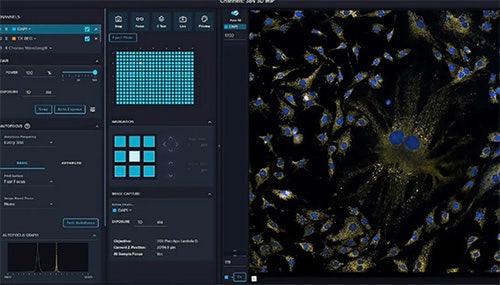
Boyd Butler, Global Product Marketing Manager of Imaging at Molecular Devices, highlights how AI-powered high-content screening is transforming 3D imaging workflows to accelerate phenotypic discovery and improve research outcomes.
Key Insights
- 3D models are driving more relevant biology: Researchers are increasingly adopting 3D cell cultures and complex models to better replicate human biology and improve drug discovery accuracy.
- Automation is essential for scalability: Advanced automation helps standardize workflows, reduce variability, and enable high-throughput imaging of complex biological systems.
- AI unlocks deeper insights from imaging data: Machine learning–driven analysis enables researchers to extract meaningful phenotypic information from large, complex imaging datasets.
- Integrated platforms accelerate discovery: Combining imaging, automation, and AI allows labs to streamline workflows and move more efficiently from data capture to actionable insights.
Summary
In an article published by News Medical Life Sciences, Boyd Butler discusses the growing impact of AI-driven high-content screening on 3D imaging and phenotypic discovery. As researchers shift toward more physiologically relevant 3D models, imaging and analysis workflows are becoming more complex and data-intensive.
The article highlights how automation is helping laboratories address these challenges by improving reproducibility and throughput, enabling consistent imaging across large-scale experiments. At the same time, AI and advanced image analysis tools are playing a critical role in extracting meaningful biological insights from high-content datasets, allowing scientists to detect subtle phenotypic changes that would be difficult to identify manually.
By integrating automation, high-resolution imaging, and AI-powered analytics, researchers can better manage the complexity of 3D systems and accelerate discovery workflows. These advancements are particularly important for drug discovery and disease research, where improved model relevance and data quality can lead to more predictive outcomes and faster development of new therapies.
Read the Full Article
This summary is based on “Advancing 3D imaging, automation, and phenotypic discovery with AI-driven high-content screening” as published in News Medical Life Sciences.