The Promise and Challenges of Organoids in Disease Research
Organoids—miniaturized, self-organizing models of human tissues—are transforming disease research and drug discovery. In this Q&A, Aaron Risinger of Molecular Devices explains how combining organoid technology with automation and artificial intelligence is helping scientists model human disease more accurately, reduce reliance on animal testing, and accelerate drug development. Risinger discusses the technical hurdles of scaling up organoid production, the promise of personalized medicine, and how automated platforms are bringing new levels of reproducibility and efficiency to biomedical research.
Labcompare: What is an organoid?
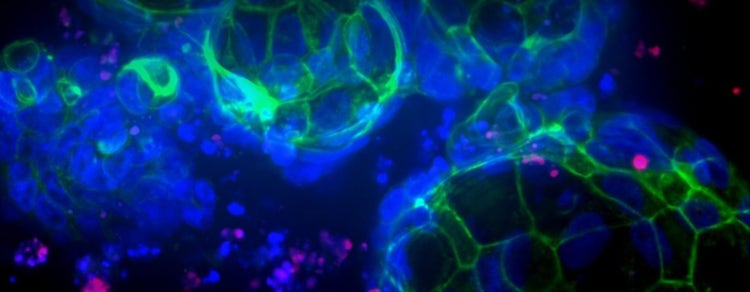
Risinger: Organoids are a class of biological models—miniature, three-dimensional structures grown in the lab that mimic the organization and function of real human organs or tissues. What sets organoids apart is their ability to self-organize into tissue-like structures containing multiple relevant cell types, all derived from a patient’s own cells or from stem cells. This self-organization means organoids can replicate some of the physiological processes and disease states of real tissues much better than traditional flat (2D) cell cultures. Importantly, organoids can be sustained in culture and show a complexity that’s much closer to actual human biology.
Labcompare: Why are organoids considered such a breakthrough compared with older cell cultures or animal models?
Risinger: Traditional 2D cell cultures have been essential for research because they’re easy to work with, scalable, and reproducible. However, over time, these cells drift away from what you’d find in the human body due to repeated selection and adaptation to the lab environment. This loss of ‘human relevance’ can be one reason so many drug candidates fail in late-stage clinical trials—up to 90%, in fact.
Animal models add complexity and can reveal more about how a drug works in a whole organism, but animals aren’t humans. There are always differences, even in closely related species, and there are ethical and scientific challenges with animal testing. Organoids offer a middle ground: they’re human-derived, can model the complexity of tissues—including different cell types interacting—and are much more predictive of how a human might respond to a drug or disease. The hope is that organoids will lead to higher clinical trial success rates and help reduce reliance on animal experiments.
Labcompare: How are organoids produced, and how much of the process is automated?
Risinger: Surprisingly, the basics of cell culture haven’t changed much since the 1990s. Many scientists are still working manually—feeding cells, changing media, and visually monitoring growth. Growing organoid cultures is an even more demanding process than traditional cell cultures. Some require feeding and monitoring as often as every six hours, which can mean night shifts and lost weekends for researchers.
Automation is starting to transform this. At Molecular Devices, we’re working to industrialize organoid production. Advanced systems use robotics for cell culturing and high-content imaging for monitoring. Artificial intelligence helps decide when to feed, passage, or add growth factors, replacing much of the manual guesswork with data-driven decisions. This not only saves time but also ensures more consistent results, which is critical for large-scale drug screening.
Labcompare: What role does AI play in organoid research?
Risinger: AI—or more specifically, machine learning—has been part of high-content screening and cell analysis for over a decade, but its importance has grown rapidly in the last three to five years as organoid research has expanded. Imaging organoids generates massive amounts of data—far beyond what a human can analyze efficiently. AI algorithms can segment images, classify cell shapes and sizes, and detect subtle patterns that might indicate how a tissue is functioning or responding to a treatment.
Beyond image analysis, AI is transforming how researchers design and test therapies. Medicinal chemists have long relied on experience and intuition to refine chemical structures, but now AI can propose new compounds, predict protein folding, and suggest modifications that are then validated against organoids. Because organoids better reflect human physiology than traditional animal models, this pairing of AI with organoids gives researchers more confidence that promising compounds will translate more successfully into clinical trials.
Finally, AI is critical for integrating the increasingly complex data that organoid studies produce. These models support multi-omic approaches—bringing together proteomic, genomic, spatial, and phenotypic readouts from the same sample. Making sense of those diverse datasets can be empowered by AI, which can uncover meaningful connections across modalities and point the way to new discoveries. In this way, AI not only helps researchers manage data overload but also opens entirely new avenues of biological insight.
Labcompare: How are organoids helping to advance cancer research?
Risinger: Cancer is extremely complex. Even within a single type like breast cancer, patients can differ widely in genetic mutations and in how their immune systems respond. That heterogeneity makes treatment challenging. Tumoroids—organoids derived directly from patient tumors—are opening the door to personalized medicine approaches. By testing drugs on models that closely mirror an individual’s cancer, researchers can see which therapies are most likely to work for the patient.
At Molecular Devices, our focus is not on clinical applications, but on building the tools that produce consistent, assay-ready organoids, so researchers have enough high-quality biology to run sensitivity tests across multiple conditions at scale, capturing a much fuller picture of how cancers behave and respond.
Labcompare: How can automation help overcome the biggest challenges to making organoid research scalable and reliable?
Risinger: Automated monitoring and analysis add a critical layer of quality control. Instead of relying on subjective, manual checks, AI-driven imaging generates a quantitative “fingerprint” of how cells should behave and flags any deviations. This level of reproducibility at scale gives researchers greater confidence in their results and accelerates progress toward more effective cancer therapies.
Ease of use is another key factor. Early automation systems often required teams of engineers and programmers just to keep everything running. Our goal has been to design platforms that biologists can operate directly, without needing advanced technical expertise.
Finally, automation drives consistency. Robots perform tasks the same way every time, reducing variability. And by culturing organoids in the very plates used for experiments, we avoid the stress cells experience when transferred, further improving reproducibility across studies.
Labcompare: Where do you see the future of organoid technology heading?
Risinger: In the near future, I think we’ll see standardization—protocols for growing organoids will become more uniform and validated across labs, speeding up progress. Next, we’ll be able to combine different organoid models—like liver, kidney, and gut—into ‘systems on a chip’ which will help us better replicate human physiology and further reduce animal testing.
Long term, the real promise is personalized medicine. Imagine a scenario where a patient’s biopsy can be used to grow enough organoids to test all available therapies rapidly, helping clinicians choose the best treatment up front. If the cancer changes, new organoids could be used to figure out the next step. We’re not there yet, but the technology is evolving quickly, and I’m optimistic about the impact it will have.