
Application Note
Automated 2D adherent and suspension culture on the CellXpress.ai Automated Cell Culture System
- Automate 2D cell culture workflows for both adherent (HCT116) and suspension (CHO) cells.
- Imaging-driven decision-making enables automated feeding, imaging, and passaging.
- Reduce manual labor and increase walk-away time for scientists.
- Scalable and reproducible cell culture expansion.
Krishna Macha, Auguste Kersulyte,
Oksana Sirenko | Molecular Devices, LLC
Introduction
Cell culture is a fundamental technique in biological research, enabling progress in disease modeling, drug discovery, and biomanufacturing. Commonly used cell lines, such as Chinese hamster ovary (CHO) cells and human colorectal tumor (HCT) cells, serve as essential tools for recombinant protein production and cancer research, respectively. CHO cells are especially prominent in the pharmaceutical industry for the development of biologics, while HCT116 cells play a critical role in modeling colorectal cancer and evaluating chemotherapeutic agents.
Despite the availability of well-established protocols, traditional cell culture remains a time-consuming and labor-intensive process. Researchers often spend significant time on routine tasks such as feeding, imaging, and passaging—sometimes outside of standard working hours. Additionally, cells are highly responsive to subtle changes in culture conditions, requiring real-time decision making to ensure optimal outcomes.
To address these challenges, the CellXpress.ai® Automated Cell Culture System was used for cell culture and handling. The system’s automated and integrated capabilities streamline the entire workflow—from seeding to passaging—without requiring constant human supervision. Designed to support a wide range of cell types, including 2D adherent cells, suspension cells, and 3D organoids, the CellXpress.ai system integrates four key components: a liquid handler, a high-content imager, an incubator, and IN Carta® Image Analysis Software. These components work together seamlessly to perform cell culture operations based on both time-driven schedules and image-based decision-making criteria.
Study overview
In this study, we evaluated the consistency and reliability of the CellXpress.ai Automated Cell Culture System to carry out long-term 2D cell culture expansion. Specifically, we tested its ability to support multi-plate experiments by automating feeding, imaging, and passaging over a 3-week period. Cells cultured in 6-well plates were monitored through daily imaging, while media changes were scheduled every 48 hours using the liquid handler. Importantly, passaging decisions were controlled automatically based on confluency of cells identified via automated image analysis. Once cells reached the defined confluency, the CellXpress.ai system autonomously initiated the passaging workflow.
The platform successfully expanded both adherent and non-adherent cultures, scaling adherent cultures from 1 to 21 plates and non-adherent cells from 1 to 9 plates. This demonstrates the system’s ability to perform reproducible and scalable cell culture workflows with minimal human input.
Applications in disease modeling and drug development
The automation enabled by the CellXpress.ai system is particularly valuable in applications requiring high- throughput and consistent culturing conditions.
For example:
- CHO cells can be cultured and expanded using the CellXpress.ai system to produce monoclonal antibodies in preclinical drug development pipelines. Automated culturing ensures batch-to-batch consistency, which is critical for protein expression studies and downstream assays¹.
- HCT cells can be maintained under controlled conditions to model colorectal cancer progression and drug response. Automated imaging and analysis facilitate dynamic monitoring of cell proliferation in response to candidate compounds, improving the efficiency and reproducibility of cytotoxicity and mechanistic assays2.
Materials
The materials used in this study included HCT116 (human colorectal carcinoma, ATCC, Catalogue # CCL-247) and CHO (Chinese Hamster Ovary, ATCC, Catalogue # CCL-61) cell lines. HCT116 cells were cultured in McCoy’s 5A medium (Fisher Scientific, Catalogue # MT10050CV) supplemented with 10% fetal bovine serum (FBS, VWR, Catalogue # 97068-085), 1% penicillin-streptomycin (Fisher/Corning, Catalogue # 30001CI), and maintained in tissue culture-treated 6-well plates (Fisher Scientific, Catalogue # 07-200-0083). CHO cells were maintained in Ham’s F-12 medium (Fisher Scientific, Catalogue # MT10080CV) with appropriate supplements and cultured in untreated 6-well suspension-compatible plates (Fisher Scientific, Catalogue # 07-000-646). For adherent cell passaging, 0.25% trypsin-EDTA (Fisher/Corning, Catalogue # MT25053CI) was used. The system also used 1000 μL standard bore with filter, conductive, pipette tips, – Sterile (Molecular Devices, Cat # YY 000 101), and 300μL, standard bore with filter, conductive, – Sterile (Molecular Devices, Cat # YY 000 081) Automation and analysis were performed using the CellXpress.ai system integrated with the IN Carta® Image Analysis Software.
Methods
Automated cell culture and expansion
Adherent and non-adherent cells were cultured and expanded into 6 well plates. For adherent culture, 1 plate of HCT-116 was expanded into 21 over 3 weeks. For non-adherent 1 plate of CHO was expanded into 9 plates over 2 weeks. To automate the culture of HCT116 and CHO cells, we used pre-configured “Feeding with Passaging” phase protocol. These protocols enabled automated execution of media exchanges, cell imaging, image analysis, and cell passaging. Cells were initially seeded into 6-well plates and loaded into the system. Media changes were scheduled every 48 hours, while daily imaging was conducted to monitor cell growth by measuring the total area covered by cells. Once cell density (covered area) reached a predefined threshold set in the IN Carta software, the system automatically initiated the passaging process. This included trypsinization (for adherent cells), cell resuspension, and reseeding into new wells or plates. The steps for typical protocol used for HCT116 cells, titled “HCT116 2D Feeding & Passaging 1:10 with Decision – for Expansion,” is shown in Figure 2. The protocol used for CHO cells, titled “CHO 2D Feeding & Passaging Non-Adherent with CHO Media”, is shown in Figure 12. These protocols incorporate all steps from feeding and imaging to automated analysis and decision- based passaging. The cycle of operations was repeated throughout for up to 4 weeks.
Imaging and analysis using CME 2D in the IN Carta software
Cell segmentation and quantification were performed using the Custom Module Editor (CME) within the IN Carta software. The protocol was optimized for both adherent and suspension cell types, enabling robust segmentation and measurement across a range of morphologies and densities.
Transmitted light images were acquired every 24 hours using a 4X objective lens, capturing four centrally located fields of view per well (Figure 1A). Images were analyzed using the protocol in the IN Carta software to quantify confluency via Total Area Sum. A custom analysis module was created in CME, where the Auto Threshold function was applied to segment “DarkObjects”. This auto- thresholding algorithm dynamically adjusts pixel intensity thresholds across the image, enabling accurate object detection under non-uniform illumination conditions.
Following segmentation, a binary mask was generated and overlaid on the original image. In the Measure Mask step, the thresholded objects were selected for quantification (Figure 1 B). The software computed morphological features including area, perimeter, and intensity. The Create Object Overlay option enabled to validate segmentation accuracy visually. The Total Area Sum, defined as the cumulative area of all segmented objects per well, was extracted from the analysis output. This metric was used as a quantitative indicator of cell density. For both adherent and suspension cell types, a predefined Total Area Sum threshold was used as a quantitative criterion: in adherent cultures, it indicated optimal confluence for passaging, while in suspension cultures, it guided decisions regarding cell dilution or transfer to new destination plates.
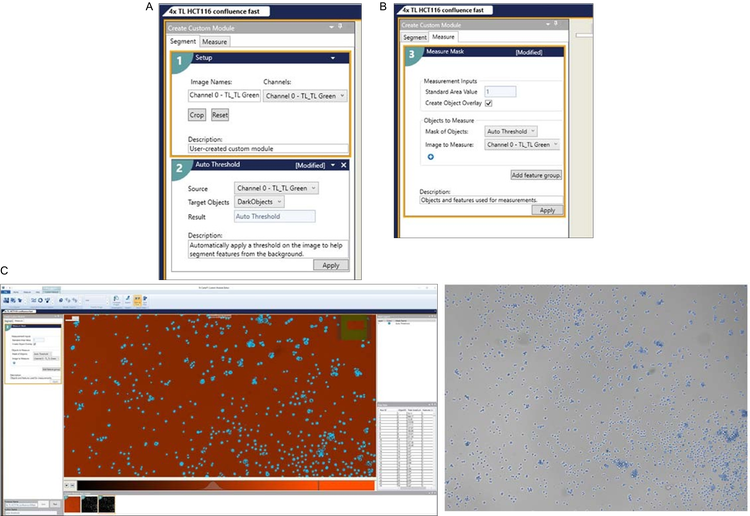
Figure 1. A. Custom Module Editor (CME) in the IN Carta software, showing the threshold setup. The Auto Threshold function is configured to detect DarkObjects in transmitted light images using TL Channel. B. Measure Mask configuration in the CME module, showing the selection of the Auto Threshold mask and Channel 0 (TL_TL Green) for quantifying segmented objects. The “Create Object Overlay” option enables visualizing measured features. C. The top image, showing the analysis interface with segmented cell objects overlaid on the transmitted light image and corresponding quantitative outputs, including object count, area, and perimeter, used to compute Total Area Sum for downstream decision-making. The bottom panel displays the corresponding TL image with the auto threshold mask applied, where blue overlays represent segmented cell regions identified as DarkObjects, enabling accurate quantification of cell area and density.
2D adherent culture (HCT 116)
Automated expansion and passaging of HCT116 cells
HCT116 cells were cultured in 6-well plates using a custom protocol with media exchange every 48 hours. During each exchange, 1,400 μL of spent McCoy’s 5A medium was aspirated and replaced with fresh medium. Transmitted light images were acquired every 24 hours using a 4X objective lens, capturing four centrally located fields of view per well. Images were analyzed using the “4X TL HCT116 Confluence fast” protocol in the IN Carta software to quantify confluency via total area sum. The Total Area Sum measurement from the analysis was used for decision making about cell passaging (see the Methods section) (Figure 2).
During cell culture, the Total Area Sum gradually increased and can be monitored as a graph. A decision-making rule was implemented to trigger automated passaging when the total area sum exceeded 20,000,000 μm² in at least 50% of wells. This value was set empirically based on visual assessment. The value corresponded to density when scientists would typically proceed with cell passaging (approximately 80% of confluency). In the expansion experiment, a confluent 6-well plate was placed into the CellXpress.ai system incubator. Imaging and analysis were completed in under 10 minutes, and passaging was initiated automatically based on the confluency threshold (Figure 7). Representative images with segmentation overlays are shown in Figure 9.
The passaging workflow included dispensing 1,400 μL of fresh medium into destination wells, aspirating 2,000 μL of spent medium from source wells, performing a 1,000 μL trypsin wash, and adding 600 μL of fresh trypsin. After a 5-minute incubation at 37 °C, 1,600 μL of medium was added to neutralize trypsin and resuspend cells. The suspension was mixed eight times, and 500 μL was dispensed into each destination well, resulting in an approximate 1:5 split ratio. Plates were gently mixed and returned to the incubator.2
This automated cycle was repeated four times over three weeks without user intervention. Cultures expanded from 1 to 3 plates, then to 9. Before the third passage, 2 of 9 plates were deselected (taken out the active experiment) to limit expansion to 21 plates, resulting in 7 plates passaging into 21. Before the fourth passage, 14 of 21 plates were deselected to maintain an experimental scale.
For culturing HCT116 cells in 6-well plates, a custom protocol was established to perform media exchange every 48 hours. During each exchange, 1,400 μL of spent McCoy’s 5A medium was aspirated and replaced with 1,400 μL of fresh medium per well. The protocol also incorporated automated transmitted light imaging every 24 hours using a 4X objective lens, capturing four fields of view centered within each well. Following image acquisition, the image analysis protocol was executed using the IN Carta software. This analysis quantified the total area covered with cells (total area sum), representing the cumulative area covered by cells in each image. A decision-making rule was integrated into the workflow to automatically trigger passaging once the total area sum reached a predefined confluency threshold.
The Figures in this section present the phases of the 2D HCT-116 passage and describe the steps.
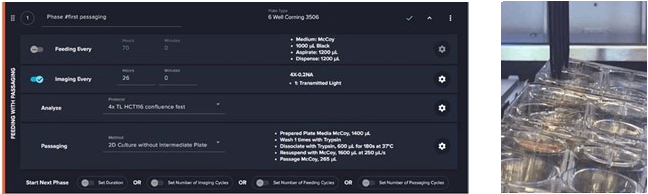
Figure 2. The screenshot, showing experimental protocol titled “HCT116 2D Feeding & Passaging 1:10 with Decision – for Expansion” used for culturing HCT116 cells in 6-well plates on the CellXpress.ai system. The protocol includes a “Feeding with Passaging” phase, in which media is exchanged every 48 hours, and transmitted light images are captured every 24 hours. Image analysis is performed using the IN Carta software, and a built-in decision-making rule automatically initiates passaging once the cells reach a predefined confluency threshold.
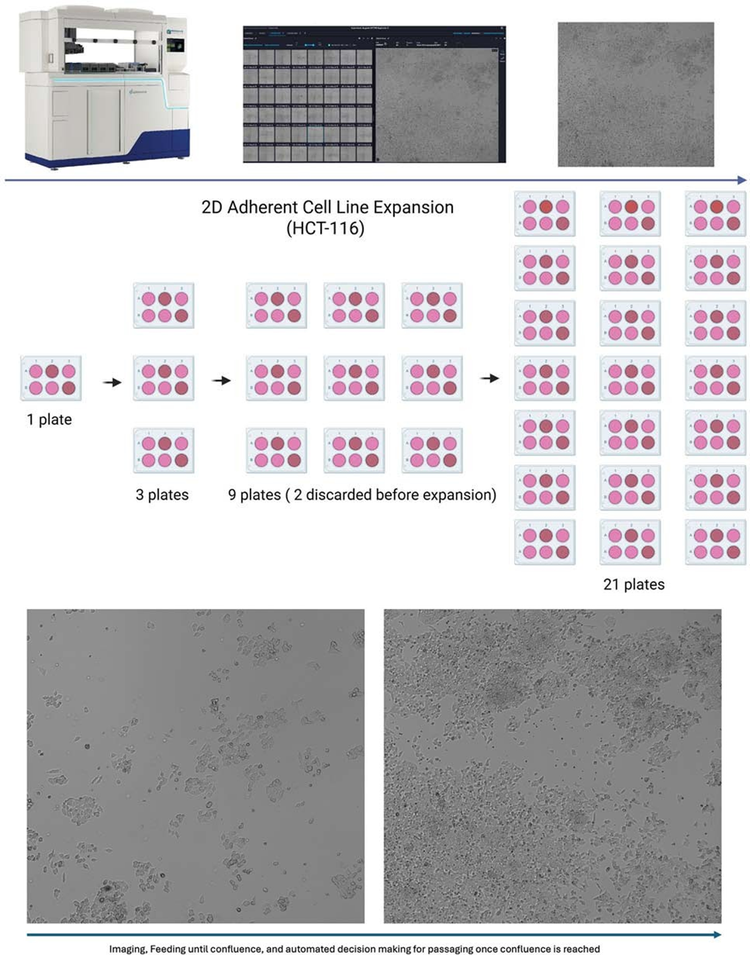
Figure 3. A. Expansion of 2D Adherent HCT-116 Cells Using the CellXpress.ai System. HCT-116 cells were maintained, imaged, and expanded using the CellXpress.ai system automated platform. Cells were initially cultured in a single 6-well plate. Following trypsinization, the culture was expanded to 3 plates. These were further expanded to 9 plates, from which two were discarded based on quality or confluency criteria. The remaining 7 plates were then expanded to a total of 21 plates. This expansion process was carried out over 3 weeks, with continuous monitoring and imaging to ensure optimal growth and morphology throughout the culture period. B. The images show cell cultures at different growth stages. The left image captures early-stage cells, while the right shows approximately 70% confluence (Day 1, Day 4).
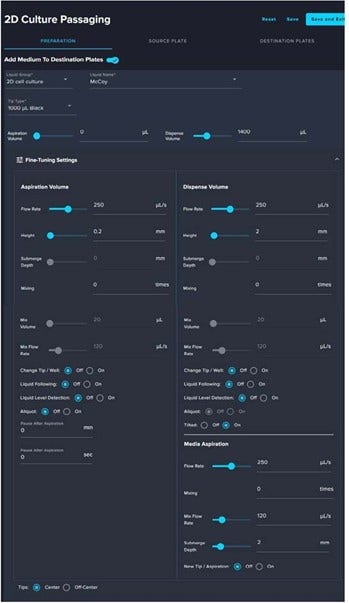
Figure 4. The software interface is organized into sections: Preparation, Source Plate, and Destination Plates. This screenshot illustrates the first step in the 2D cell culture passaging workflow: preparation of destination plates. In the Preparation section, the system is configured to dispense McCoy’s medium from a 2D cell culture liquid source using 1000 µL tips. The system warms the plates and media in the incubator, ensuring optimal conditions before cell seeding.
Users can adjust aspiration and dispense volumes (e.g., 0 and 1400 µL) and fine-tune parameters such as flow rate (250 µL/s), aspiration/ dispense height, submerge depth, and mixing settings. Additional automation features include options for liquid following, liquid level detection, aliquoting, and tip changes. Those features would allow to optimize the protocol for specific cells and workflows.
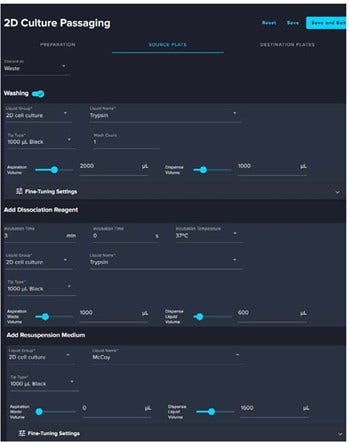
Figure 5. This screenshot illustrates the sequential steps involved in the dissociation of cells from the source plate during 2D cell culture passaging. The process begins with washing the wells using Trypsin (2D cell culture) with a 1000 µL tip, aspirating 2000 µL, and dispensing 1000 µL. Next, the cells are treated with a dissociation reagent (Trypsin) for 3 minutes at 37°C, with 1000 µL aspirated and 600 µL dispensed.
Finally, the cells are resuspended in McCoy’s medium, with a dispense volume of 1600 µL. These automated steps ensure consistent and efficient cell detachment and preparation for transfer.
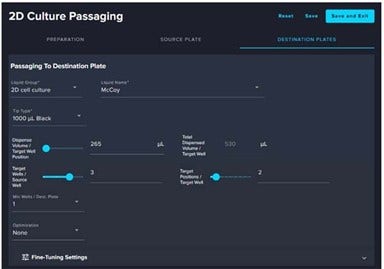
Figure 6. This screenshot shows the final step, where cells are transferred from the source plates to destination plates that have already been prepared with media. The “Destination Plates” tab, where users can configure parameters for cell seeding, shows an example.
The dispense volume (McCoy’s medium) per target well is set to 250 µL, with a total of 500 µL dispensed (for two droplets). Users can select specific source and target well positions, ensuring accurate and consistent cell distribution. Additional options for fine-tuning the dispensing process are also available.
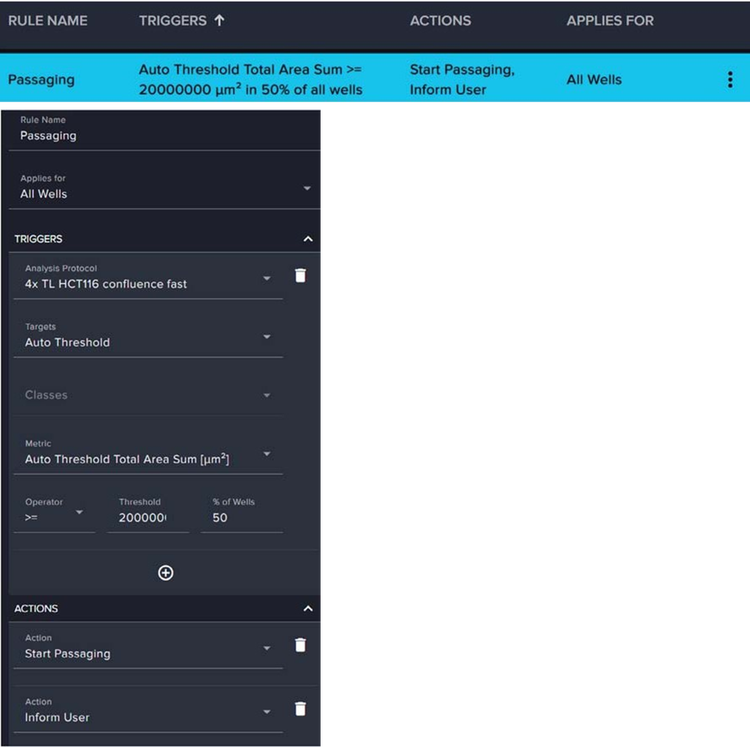
Figure 7. These screenshots illustrate the decision-making rule used to trigger the start of cell passaging or notify the user. The rule, named “Passaging,” is applied to all wells and is based on image analysis data. It is triggered when the Auto Threshold Total Area Sum or a defined confluence metric reaches a specified threshold, in this case, 50% of wells exceeding a target value (threshold of 20,000,000 µm²). Once this condition is met, the system was configured to either automatically initiate passaging or inform the user. The interface allows users to define the analysis protocol, set thresholds, and choose actions, enabling automated and consistent decision-making in cell culture workflows.
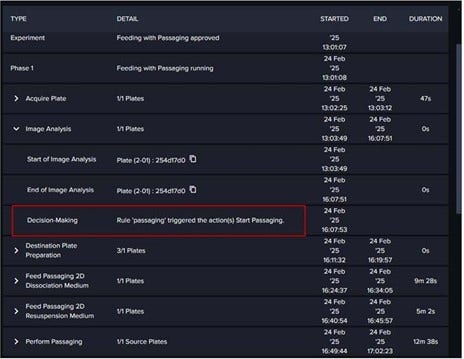
Figure 8. Displays the experiment’s event log, detailing the sequence of actions following rule activation: first, the plate is imaged; then, image analysis is performed; once analysis is complete, passaging is initiated immediately. The system prepares destination plates, dissociates and resuspends source cells, and finally seeds the cells into new plates.
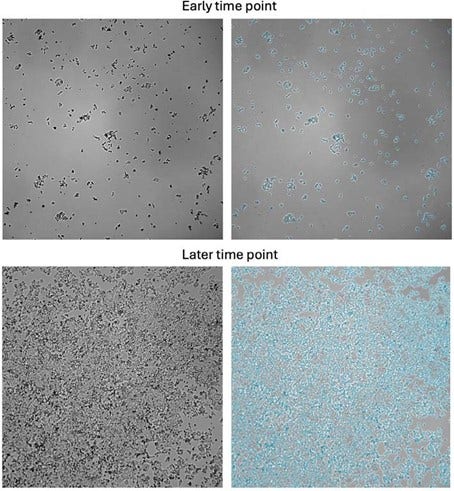
Figure 9. Representative images of HCT-116 cells acquired using the CellXpress.ai system and analyzed with the IN Carta software. Cell segmentation, performed with the Custom Module Editor protocol named “4X TL HCT116 Confluence fast,” is overlaid in blue. Early timepoint shows sparse cell distribution, which increases over time until cell density (later timepoint) reaches the threshold that triggers automated passaging.

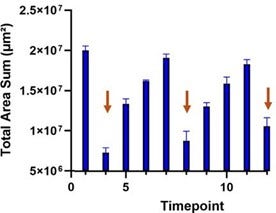
Figure 10. Plot showing the change in total area sum (μm²) of HCT116 cells averaged across all plates imaged from March 18 to April 8. Cells were passaged following imaging timepoints 1, 3, 7, and 11 (indicated by orange arrows). Imaging was performed every 24 hours, with occasional interruptions due to experiment pauses for demonstrations. Error bars represent the standard deviation between plates.
2D suspension cell line expansion
Automated expansion and passaging of CHO cells
For CHO cell expansion, a single 6-well plate containing highly confluent cells was placed into the CellXpress.ai system incubator and imaged immediately. Image analysis using the “4X TL HCT116 Confluence fast” protocol in the IN Carta software revealed that the Total Area Sum exceeded 20,000,000 μm² in 50% of wells, triggering automated passaging based on a predefined decision rule. As with the HCT116 workflow, all required consumables were preloaded onto the liquid handler deck, enabling immediate initiation of the passaging process.
The passaging protocol used Feeding with Passaging routine that began with preparation of destination plates by dispensing 2,000 μL of CHO medium into each well of the destination plate. Cell passaging protocol was simpler than for HCT116 cells. Since CHO cells are non-adherent and do not require enzymatic dissociation, the dissociation step was replaced by adding a minimal volume of just media to each source well. Subsequently, 600 μL of medium was added, and the suspension was mixed five times to ensure uniform distribution. A 200 μL aliquot of the cell suspension was transferred to each destination well, with 100 μL dispensed at two distinct positions to optimize seeding. Efficient mixing was achieved using 300 μL pipette tips. Cells were seeded at a 1 well into 3 well ratio, with an approximate 1:5 split by volume. Plates were gently mixed and returned to the incubator. Representative segmented images are shown in Figure 13.
Automated passage occurred three times over the course of the experiment. Cultures expanded from 1 to 3 plates, then to 9. Cell density increase measured as covered area, which represent a growth curve over time is shown in Figure 16, with error bars representing standard deviation across plates. Passaging events correspond to imaging timepoints 1, 5, and 8, each coinciding with the average Total Area Sum surpassing the 20,000,000 μm² threshold.
To accommodate the suspension growth of CHO cells, the culturing protocol was slightly modified. Media exchange was performed every 48 hours, but only 600 μL per well was replaced to minimize cell loss. Imaging was conducted every 24 hours using transmitted light at 4X magnification, capturing four by four central fields of view per well. Once the covered cell area threshold was reached, the system automatically initiated the passaging workflow.
The Figures in this section will walk you through the phases of the 2D CHO cells passaging and describe the steps followed:
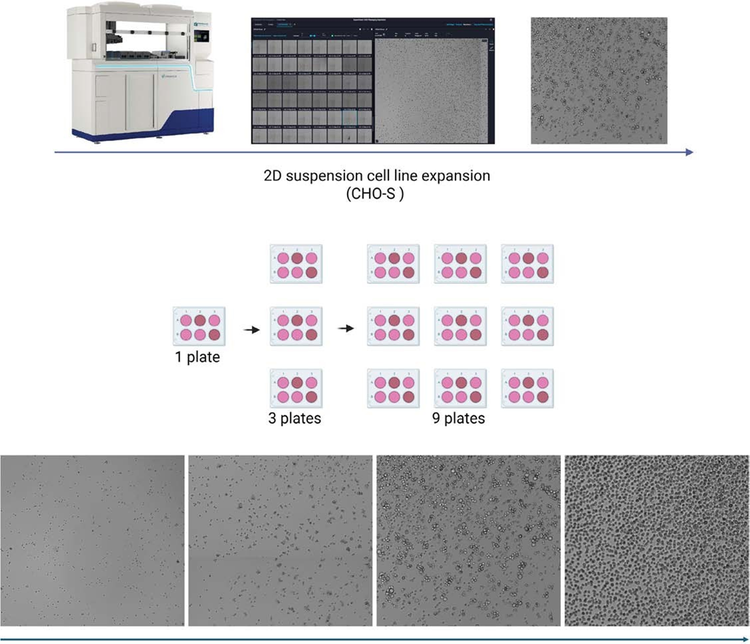
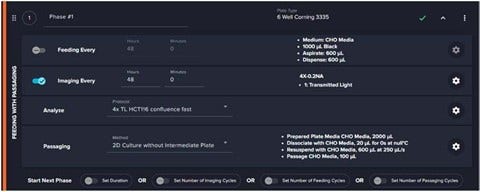
Figure 12. Shows experimental protocol titled “CHO 2D Feeding & Passaging Non-Adherent with CHO Media” used for culturing CHO cells in 6-well plates on the CellXpress.ai system. The protocol features a “Feeding with Passaging” phase, where media is exchanged every 48 hours and transmitted light images are captured every 24 hours. Image analysis is performed using the IN Carta software, and a decision-making rule automatically initiates passaging once cells reach a predefined confluency threshold.
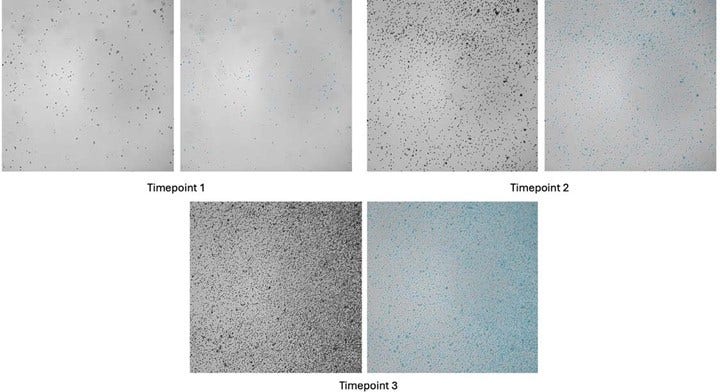
Figure 13. Representative images of CHO cells acquired using the CellXpress.ai system and analyzed with the IN Carta software. Cell segmentation, performed with the Custom Module Editor protocol named “,” is overlaid in blue. Early timepoints show sparse cell distribution, which increases over time until the covered area reaches the threshold that triggers automated passaging.
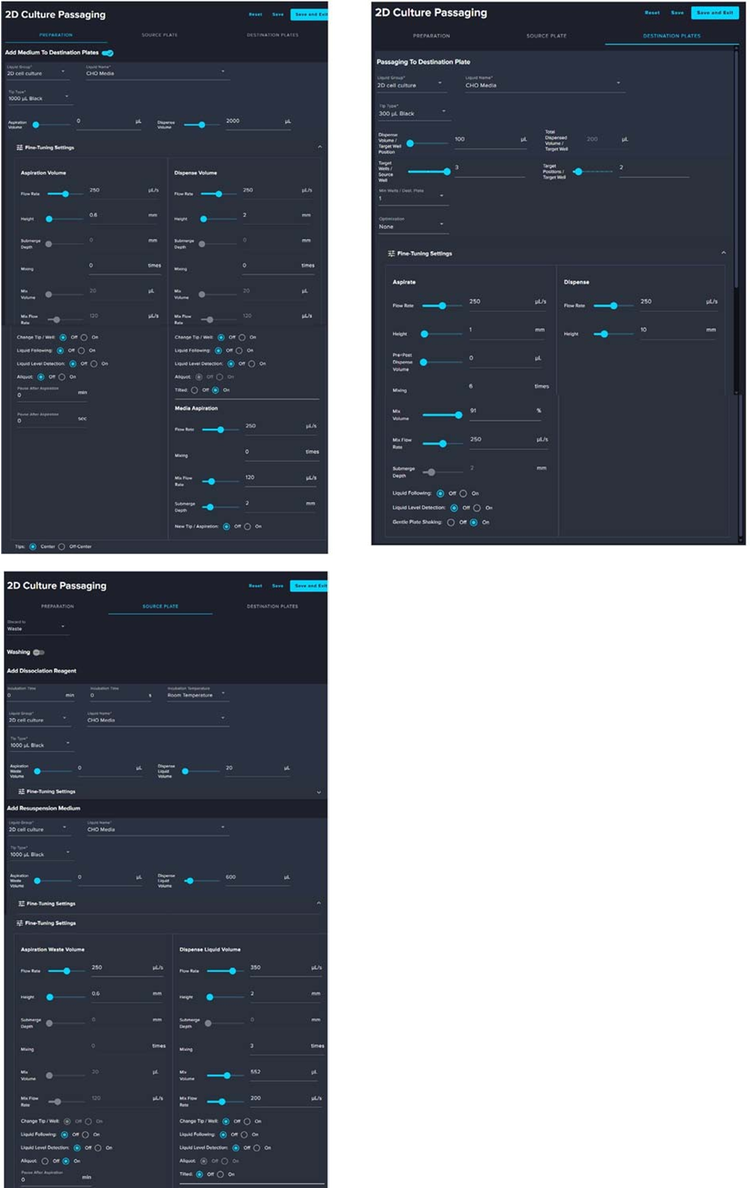
Figure 14. A. Preparation of Destination Plates for CHO Cell Passaging. This screenshot shows the initial step in CHO cell passaging using the CellXpress.ai system. The system dispenses 2000 µL of CHO media into each well of the destination plates using 1000 µL tips. Fine-tuned liquid handling parameters and liquid level detection ensure accurate dispensing. Plates are then incubated until cell seeding. B. Preparation of Source Plate for CHO Suspension Cell Passaging. This screenshot illustrates the preparation of the source plate for CHO suspension cell passage using the CellXpress.ai system. Unlike adherent cells, CHO suspension cells do not require a dissociation reagent. Instead, CHO media is used to resuspend the cells through controlled aspiration and dispensing. The interface displays key parameters including a dispense volume of 600 µL, aspiration flow rate of 250 µL/s, and mixing settings (20 times at 50 µL/s). These fine-tuned settings ensure uniform cell dispersion before transferring. C. Dispensing CHO Cells to Destination Plates. This screenshot shows the final step in CHO cell passaging using the CellXpress.ai system. Cells are dispensed from the source to pre- prepared destination plates using 300 µL tips. Dispense volume is set to 100 µL per well, with fine-tuned aspiration and mixing parameters to ensure accurate and consistent seeding.
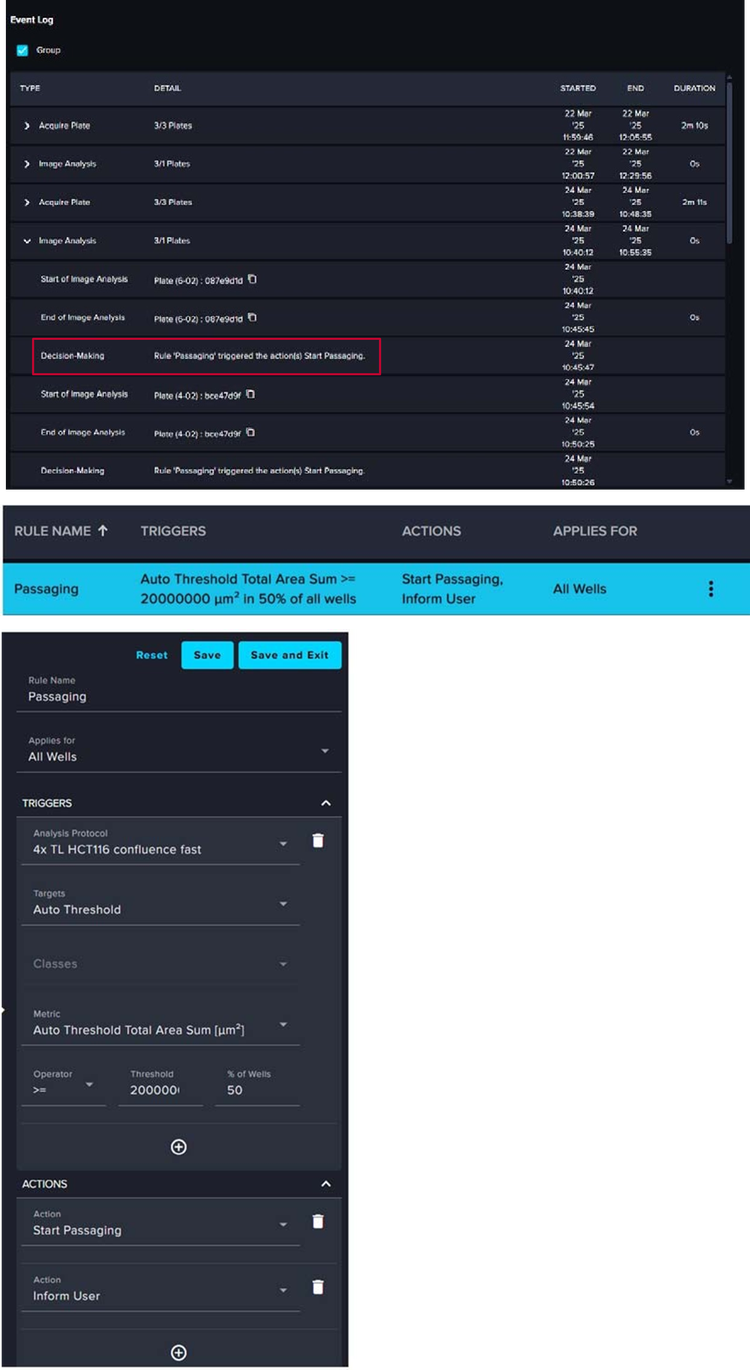
Figure 15. (A–C). Screenshots illustrate how the CellXpress.ai system automates CHO cell passaging using rule-based triggers. In (B & C), the “Passaging” rule initiates when the Auto Threshold Total Result exceeds 1,000,000 or 10% of total units. In (C), a “Passaging” rule triggers when 50% of wells surpass a confluence threshold of 20,000,000 μm², based on the 4X TL HCT116 Offset protocol. The event logs in (A) confirms automated execution of actions like Start Passaging. The system enables real-time decisions with minimal manual input.
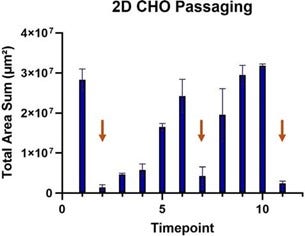
Figure 16. Plot showing the change in total area sum (μm²) of CHO cells averaged across all plates imaged from March 18 to April 1. Cells were passaged following imaging timepoints 1, 5, and 8 (indicated with orange arrows). Imaging was performed every 24 hours, with occasional interruptions due to experimental pauses for demonstrations. Error bars represent the standard deviation between plates.
Estimation of time saving for scientists
Managing 21 HCT- 116 adherent or 9 - CHO suspension 6-well plates require a highly structured weekly workflow involving feeding, passaging, and imaging. With each HCT 116 plate requiring three feedings, two passages, and two to five imaging sessions per week, and CHO plates following a similar schedule, the cumulative hands-on time scales significantly. Based on the estimates provided of manual culturing, HCT 116 tasks total approximately 12 hours weekly, while CHO tasks require about 6 hours. These tasks include media changes, cell detachment, centrifugation, and microscopy.
The use of The CellXpress.ai system transforms this intensive routine by automating key steps such as media exchange, cell monitoring, image acquisition, and cell passaging. Once the protocols are set up, it would take as little as 15mins every day for two to three days to refill media or quickly check the instrument. This not only provides researchers with substantial walkaway time, freeing them to focus on data analysis or parallel projects, but also has data traceability. As the scale of experiments grows, the value of automation becomes even more pronounced, making the CellXpress.ai system a critical asset in high-throughput cell culture workflows.
The time estimates provided in this table are approximations and not strictly linear. For example, while imaging one plate manually takes approximately 10 minutes, tasks can be staggered and processed more efficiently when performed in bulk. These estimates reflect typical manual workflows and may vary depending on user experience and lab setup.
Table 1. Weekly time estimate for imaging, feeding, 21 HCT-116 plates and 9 CHO suspension plates, plus passaging 7 HCT-116 plates and 3 CHO Suspension plates.
Summary
This application note demonstrates how the CellXpress.ai Automated Cell Culture System enables fully automated expansion of 2D adherent (HCT116) and suspension (CHO) cell cultures. By integrating imaging, liquid handling, and decision-based passaging, the system scaled cultures to 21 plates (HCT116) and 9 plates (CHO) with minimal manual input. Real-time image analysis triggered passaging based on confluency thresholds, ensuring consistent growth and reducing weekly hands-on time from 18 hours to under 1. Automation supports high-throughput workflows in drug development and disease modeling, making the CellXpress.ai automated cell culture system a powerful tool for scalable, reproducible cell culture.
References
- Kim, J. Y., Kim, Y. G., & Lee, G. M. (2012). CHO cells in biotechnology for production of recombinant proteins: current state and further potential. Applied Microbiology and Biotechnology, 93(3), 917–930. https://doi.org/10.1007/s00253-011-3758-5
- Ahmed, D., Eide, P. W., Eilertsen, I. A., Danielsen, S. A., Eknaes, M., Hektoen, M., & Lothe, R. A. (2013). Epigenetic and genetic features of 24 colon cancer cell lines. Oncogenesis, 2(9), e71. https://doi.org/10.1038/oncsis.2013.35