
Application Note
Accelerating Anaerobic Microbiome Workflows with QPix FLEX
- Anaerobic Compatibility: Compact design and chamber compatibility maintains sterility and functionality under anaerobic conditions, supporting culturomics and microbiome applications.
- Accelerated Screening: Enables colony picking 1–2 days earlier than manual workflows, owing to the high-resolution imaging, reducing overall assay time.
- Traceability: Integrates imaging metadata with colony selection records, ensuring reproducibility and regulatory compliance.
Introduction
The gut microbiome harbors one of the most diverse and functionally important ecosystems in the human body, influencing everything from digestion to immunity and neurological health with the potential to prevent or treat disease. This vision is at the heart of the rapidly expanding field of microbiome therapeutics, where our own gut microbiota – fragile yet immensely powerful – is emerging as a new class of medicine.
The human gut microbiome is a vast and dynamic ecosystem, home to trillions of microorganisms that collectively encode over 150 times more genes than the human genome. These microbes have co-evolved with us over millions of years, shaping our immune system, influencing metabolism, and even modulating brain function. Yet, this intricate symbiosis is not fixed – it is profoundly shaped by lifestyle, diet, and geography.
Comparative studies of microbial diversity across populations reveal striking differences. For example, the gut microbiota of the Hadza hunter gatherers in Tanzania (n = 730) showed far greater diversity than that of rural Nepalese villagers (n = 317) or urban Californians (n = 277)1. The Hadza’s traditional, fiberrich diet and close contact with natural environments foster a thriving, resilient gut ecosystem – one that may protect against many chronic diseases prevalent in industrialized societies.
Over the past decade, the gut microbiome has shifted from scientific curiosity to the focus of a biotech gold rush. The therapeutic potential is clear, but so are the challenges. Despite more than 30,000 microbiomerelated publications in the past year alone and three FDA-approved microbiota-based therapeutics, the majority of clinical efforts have targeted only the 30–40% of gut microbes that can be cultured, leaving 60–70% of the microbiota uncultured and unexplored – a vast reservoir of potential therapeutics hidden in plain sight. Understanding and harnessing the full diversity of this gut microbiota is the next frontier in microbiome science.
Anaerobic culturomics, the comprehensive culturebased characterization of microbiome samples, offers unparalleled access to diverse, low-abundance microorganisms often missed by sequencing alone. Yet, translating stool samples into curated strain libraries remains a formidable challenge as traditional workflows remain labor-intensive and limited by manual colony picking, streaking, and hit selection, all of which are further complicated by the hypoxic environment required for anaerobic growth.
Traditional gut microbiome culturomics workflows are constrained by manual labor, low throughput, and the complexities of anaerobic cultivation. Isolating colonies from fecal plates requires meticulous picking and streaking inside anaerobic chambers, followed by identification, hit selection, and bio-banking - often spread across disconnected platforms and spanning over a week. These bottlenecks hinder reproducibility, diversity capture, and scalability, making it difficult to meet the demands of personalized therapeutics, strain engineering, or functional screening using organoid models.
The QPix® FLEX™ workcell transforms this landscape by offering an integrated system for anaerobic colony imaging, automated colony plating and picking, and liquid culture handling. Colonies are transferred into 96-well plates, with full barcode tracking to maintain traceability from colony isolation to identification and downstream assays. In recent gut microbiome applications, automation enabled recovery of rare commensals and novel morphotypes, while cutting overall workflow time. Ergonomic burden was dramatically reduced, and throughput doubled, supporting high-resolution profiling of microbiome samples for applications including anti-inflammatory screens, metabolic pathway characterization, and live biotherapeutic formulation.
The QPix FLEX system brings scalability, reproducibility, and efficiency to gut microbiome culturomics, making strain-level discovery not only possible but practical for translational research and precision microbiome engineering. This workflow transformation is particularly impactful for probiotic screening, microbial therapeutics, and functional phenotyping. The QPix FLEX integrated workcell thus redefines culturomics efficiency, making high-throughput anaerobic workflows feasible, scalable, reproducible, and ergonomically sound.
Methods
Sample Collection
Human fecal samples were collected using sterile containers and immediately transferred into an anaerobic chamber to preserve microbial viability. All handling was performed under anaerobic conditions to maintain the integrity of obligatory anaerobes.
Plating and Culturomics
Samples were serially diluted and plated onto selective and differential agar media tailored for culturomics of gut microbiota. Plates were incubated anaerobically at 37 °C for approximately 48 hours to allow colony formation. Media selection was designed to enrich for diverse microbial taxa, including lactic acid bacteria and other fastidious anaerobes.
Liquid Handling
A total of 1.3 mL of anaerobic liquid broth culture was dispensed into each well of a sterile 96-deep-well plate using the QPix FLEX automated colony picking and liquid handling system fitted with 1,000 μL sterile conductive filter tips. The transfer was carried out within an anaerobic chamber to preserve culture integrity. The QPix FLEX method was configured to deliver the target volume in two sequential aspiration–dispense steps per well, ensuring accuracy without exceeding tip capacity.
Colony Picking and Liquid Culture
Using the QPix FLEX Microbial Colony Picker, colonies ranging from 0.1–3 mm in diameter were selected based on morphological features such as size, shape, and edge definition. Colonies were then automatically transferred into two 96-deep-well plates containing anaerobic liquid media. Cultures were incubated for 3-5 days at 37 °C under anaerobic conditions to promote biomass expansion.
Hit Picking and Culture Expansion
Following incubation, cultures were aspirated using integrated liquid handling systems. A volume of 200 μL was removed from each well and transferred to a fresh 96-deep-well plate for MALDI-TOF analysis (sample preparation), while the remaining 1.3 mL was transferred into another fresh 96-deep-well plate for preservation in Glycerol at -80 C after strain identification using MALDI-TOF analysis.
MALDI-TOF Sample Preparation and Analysis
Aliquots from each culture were pelleted, and the cells were spotted onto a MALDI-TOF target plate in a 96-well format. Samples were then air-dried and analyzed. Spectral data was acquired and matched against reference databases to identify microbial species. Identification was typically completed within two days of culture.
Results
Colony Picking on Blood Agar
Anaerobic culturing of lactic acid bacteria on blood agar produced visible colonies within 24 hours. While manual identification was limited at early time points due to low contrast and surface artifacts, the QPix FLEX system enabled automated detection of discrete clones by day 2 using high-resolution imaging and morphology-based classification. Colonies picked under anaerobic conditions were validated via MALDI-TOF mass spectrometry, confirming strain identity and demonstrating compatibility with downstream analytical workflows.
The image below (Figure 1) captured the growth of lactic acid bacterial colonies on blood agar following overnight anaerobic incubation. By day 2, discrete clones had begun to emerge, though manual identification remained challenging due to low contrast and surface artifacts such as bubbles. The annotated image highlights a representative clone and a bubble, illustrating the difficulty of distinguishing viable colonies by eye at early time points.
By days 3–4, colony morphology became more pronounced, enabling manual picking. However, reliance on visual inspection delayed the workflow and introduced variability. The QPix FLEX system addressed this limitation by leveraging high-resolution imaging and automated classification to detect colonies earlier and more reliably. Colonies were scored based on size, shape, and intensity, allowing for confident selection even when visual cues were ambiguous.
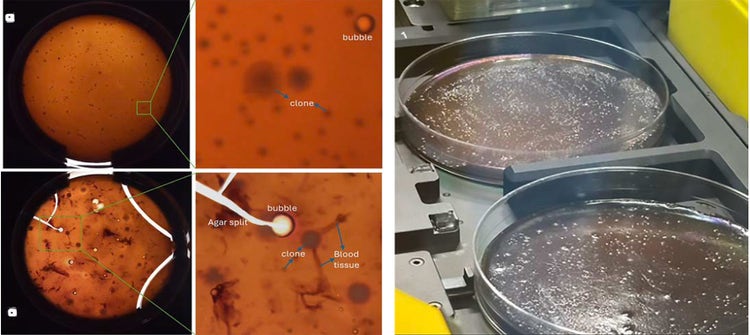
Figure 1. Bacterial colonies from a stool sample grown on blood agar after anaerobic incubation (right). Discrete clones that were detected by the software to be picked (right), but manual identification was hindered by low contrast and surface artifacts like bubbles.
Colony Selection and picking on modified MRS agar
Diversity and purity are critical in microbiome workflows, especially those targeting metabolic outputs or therapeutic applications. The QPix FLEX system evaluated colonies using five key parameters: size, shape, intensity, edge sharpness, and contrast. This scoring system simplifies decision-making and reduces the burden of manual image analysis, which can be overwhelming in high-throughput workflows. By integrating these features, the QPix FLEX system enabled users to prioritize colonies that are most likely to succeed in downstream applications.
The image below (Figure 2) shows colonies cultured on modified MRS media that were stratified into eight groups based on diameter metrics derived from QPix FLEX imaging. Each group represented a distinct size range, enabling targeted selection of morphologically diverse clones. From each group, 12 colonies were picked using automated criteria, ensuring consistent representation across the diameter spectrum.
Following incubation under identical anaerobic conditions, a second cycle of colony picking was performed on the same source plates. The same imaging and classification settings were applied to identify newly emerged colonies. This iterative approach facilitated the selection of additional clones with distinct morphologies, expanding the diversity of the colony pool while maintaining reproducibility.
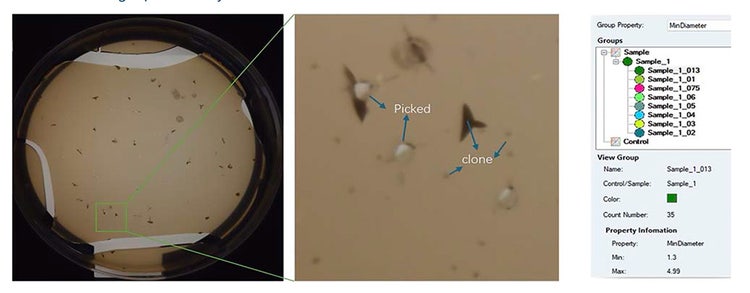
Figure 2. Colonies cultured on modified MRS media stratified into eight groups based on diameter metrics derived from QPix FLEX imaging. Each group represents a distinct size range, enabling targeted selection of morphologically diverse clones.
MALDI-TOF Confirmation of Picked Colonies
The image (Figure 3) presents a MALDI-TOF spectral profile of a strain isolated using the QPix FLEX system under anaerobic conditions. The fingerprint matches the expected profile for the target lactic acid bacterium, confirming the accuracy and sterility of the automated picking process. This step demonstrated that colonies selected by the QPix FLEX system are not only pure and morphologically distinct but also biologically relevant, supporting downstream identification and characterization workflows.
This integration of automated colony plating and picking with MALDI-TOF analysis streamlines the transition from colony isolation to strain validation, reducing turnaround time and enhancing reproducibility.
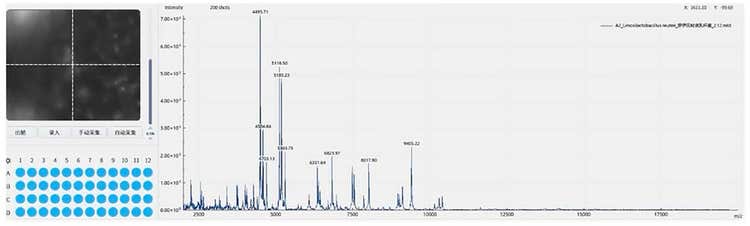
Figure 3. MALDI- TOF data from an anaerobic strain isolated on QPix FLEX. The strain isolated with QPix FLEX in anaerobic conditions displays the expected MALDI-TOF profile.
Discussion
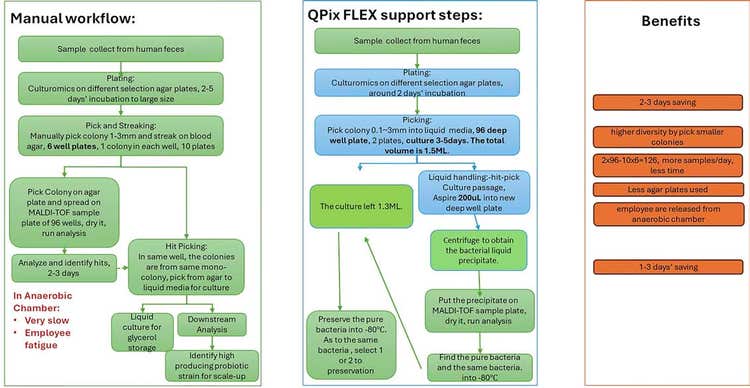
Figure 4. Comparative Anaerobic Workflows for Culturing Fecal-Derived Bacteria: Manual vs. QPix FLEX-Integrated Approach.
Conclusion
The integration of the QPix FLEX integrated workcell into anaerobic culturing workflows enabled early, automated, and morphology-based colony selection with high reproducibility. Stratifying colonies by diameter and applying iterative picking cycles expanded the diversity of recovered strains while minimizing manual intervention. Combined with MALDITOF validation, this approach streamlined the isolation of viable, phenotypically distinct clones – accelerating downstream microbiome analysis and strain development.
References
- Conroy, Gemma. 2023. “Hunter-Gatherer Lifestyle Fosters Thriving Gut Microbiome.” Nature, June 22, 2023. https://doi.org/10.1038/d41586-023-02065-y