Molecular Cloning
Automate the most variable steps of cloning – for faster, more reproducible results.
What is molecular cloning?
Why molecular cloning workflows break down
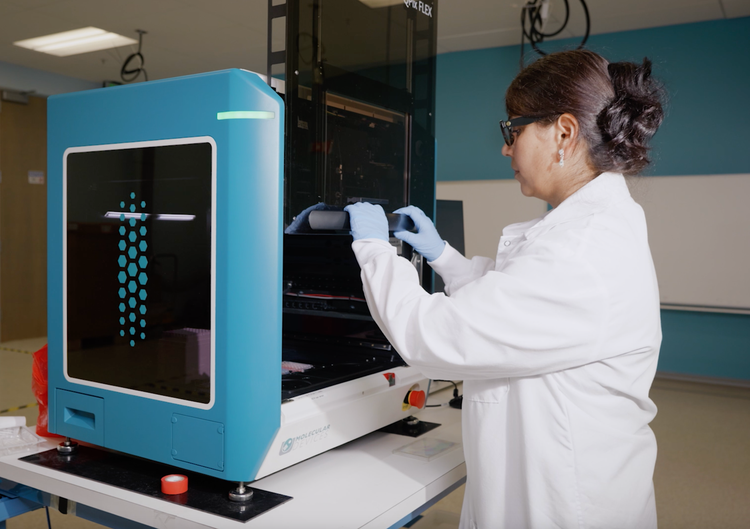
Although molecular cloning is a well-established technique, many workflows struggle to deliver consistent results at scale. The most common breakdowns occur not during DNA design or assembly, but during the physical steps that translate genetic material into viable, isolated colonies. Manual plating and streaking can produce uneven colony distribution, while subjective colony selection introduces variability between operators, experiments, and sites. Subtle differences in colony morphology – often linked to genetic or functional differences – are easy to miss when selection relies on the human eye alone.
As throughput increases, these challenges are amplified. Large libraries, time-sensitive experiments, and complex applications such as synthetic biology, microbiome research, and CRISPR screening place greater demands on accuracy and reproducibility. In hypoxic or space-constrained environments, manual handling further increases fatigue and contamination risk. Without standardization at these early steps, variability compounds downstream, leading to failed sequencing runs, inconclusive assays, and the need to repeat experiments. Addressing these breakdowns requires moving beyond manual processes toward automated, image-driven colony handling that brings consistency, traceability, and confidence into the cloning workflow.
The molecular cloning workflow: where variability is introduced – and how to reduce it
Molecular cloning workflows follow a familiar sequence, but consistency can break down at multiple points along the way. Understanding where variability is introduced—and how to mitigate it—helps researchers design workflows that scale without sacrificing reproducibility.
Molecular Cloning Applications and Resources
Molecular cloning is rarely an end point. These related applications and workflows build on cloned DNA, engineered strains, and validated constructs—helping researchers move from design to discovery with confidence.