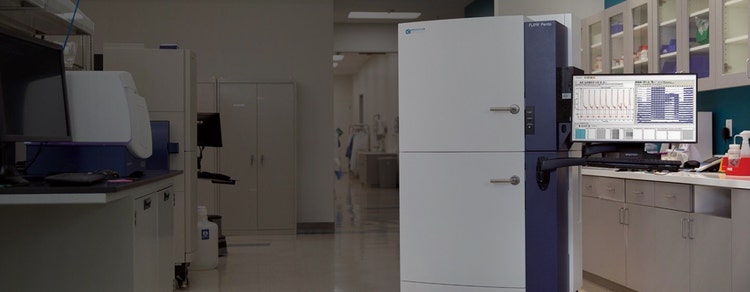
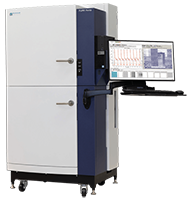
FLIPR Penta High-Throughput Cellular Screening System
High-throughput kinetic screening for toxicology and lead compound identification
An industry-renowned instrument for monitoring GPCRs and ion channels
Powered by a new, optional high-speed EMCCD camera and the new Peak Pro 2 software module, the new FLIPR® Penta High-Throughput Cellular Screening System allows you to measure and analyze peaks of human-derived induced pluripotent stem cells (hiPSCs), differentiated into cardiomyocytes and neurons, up to 100 times per second and quickly cherry pick events such as Early Afterdepolarization-like events (EAD-like events), fibrillation, and irregular beating.
Since its introduction, the system has developed a reputation for reliability and ease of use. The system can be configured based on library size, detection mode, screening format, assay, and target, making the transition from assay development to lead optimization a seamless process.

Assess toxicity effects
The HS-EMCCD camera option allows for up to 100 measurements per second, providing detailed information about cardiomyocyte and/or neuronal oscillation. Combined with the ScreenWorks® Peak Pro 2 software analysis module, compound-induced pro-arrhythmic effects such as EAD-like events can be easily identified and flagged.

Identify lead compounds
With seven LED sets, many filter options, and fluorescence or luminescence detection, the FLIPR system supports many assays, including calcium flux, potassium, and membrane potential.

Configure to your throughput
The FLIPR Penta system can be configured to match user needs. From manual assays to automated solutions, to measuring 96-, 384-, or 1536-well samples at a time, to using wash or no-wash assay kits in adherent mode, the system can be upgraded as needs change in the future.

Features

Complex event analysis
ScreenWorks Peak Pro 2 software analysis, powered by pCLAMP 11, gives you the unique ability to characterize calcium oscillation peak data in one software program. Compounds can be flagged that cause waveform irregularities that may indicate hazards for arrhythmia, seizures, or other toxicity effects quickly and without having to export data. Distinctly different calcium oscillations in neurons can also be characterized.

Configurable optics
The FLIPR Penta system can be matched to user needs starting with a standard EMCCD camera, a more cost-effective solution that is perfect for GPCR and Membrane Potential assays, or with the new HS EMCCD that can capture up to 100 images per second and offers exceptional luminescence performance. The camera, LEDs, and filters can be configured at the time of purchase or later when assay needs change.

User-changeable pipette modules
Pipette heads can be changed in minutes without the use of tools from 96, 384, or 1536 channels to accommodate assay throughput needs.

Ease of use
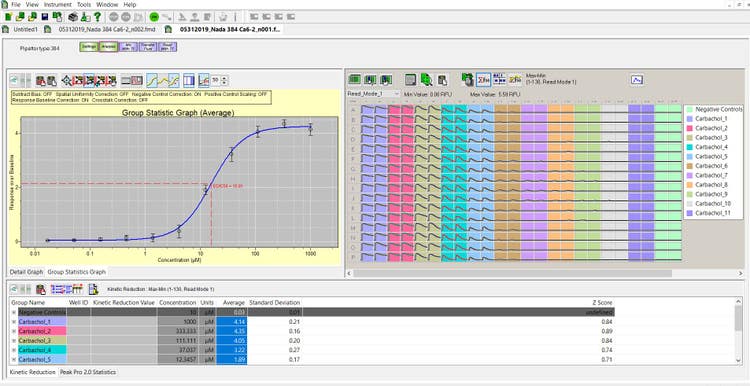
ScreenWorks software seamlessly incorporates drag-and-drop protocols, intuitive buttons, and color-coded plate layout to simplify workflows. View signal traces, EC50 curves, and Z factors on-the-fly without having to export data to another software program.

Validated solution
Purchasing a FLIPR system from Molecular Devices assures users that they are investing in a technology that can grow with them. Hardware, software, and assay kits have been validated on the system by an industry-renowned leader with over 40 years of experience.

Custom automation options*
The drug discovery process has shared methods, yet each project is unique. The Advanced Workflow Engineering Solutions Team offers a variety of customized services from automated compound plate delivery to fully integrated workstations with automated incubation.
*Price, time to deliver, and specifications will vary based on technical requirements agreed upon. Solution requirements may cause adjustment to standard performance.
ScreenWorks Software with customizable protocols and data analysis for high-throughput kinetic assays
The FLIPR Penta system utilizes our ScreenWorks Software to define and run experimental protocols. Using a drag-and-drop interface, protocols can be easily set up to include:
- Standard fluorescent or luminescent read modes or optional aequorin luminescence detection
- Complex quadrant, multiple aspirations or multiple dispensing liquid handling
- Single or ratiometric kinetic cell-based reading
- Tip washing with up to two solvents
- Simple-to-create automation protocols
- Optional Peak Pro software module with easy signal oscillation anomaly detection
FAQs
What are the specific tasks that FLIPR can perform?
The FLIPR Penta is an industry-renowned instrument for monitoring GPCRs and ion channels. Specifically, the FLIPR Penta can:
- Monitor GPCR activity and corresponding intracellular second messenger changes (Calcium and cAMP) using fluorescence and luminescence cell based assays
- Observe real-time membrane potential changes associated with ion channel activation and ion transporter proteins
- Observe calcium flux to assess cardiotoxicity in the early stages of drug discovery
- Measure functional activity of ligand- and voltage-gated potassium channels
- Measure the change of global intracellular calcium, in response to the activation of ion channels
- Detect calcium oscillations in 3D cardiomyocyte and neuronal, providing a biologically relevant assay system to assess potential new pharmaceutical treatments and environmental toxins
- Enable fast “inject and read” kinetic enzyme assays, increasing the throughput of biochemical assays compared to standard plate readers
What assays does FLIPR Penta support?
The FLIPR Penta System supports a wide range of assays, such as GPCR assays using FLIPR Calcium Assay Kits and Ion Channel assays using the FLIPR Membrane Potential Assay Kit, FLIPR Potassium Assay Kit, and FLIPR Calcium Assay Kit. Cardiomyocytes can also be used to evaluate compound effects earlier in the drug discovery process with the EarlyTox Cardiotoxicity Kit
What are the features of FLIPR’s new EMCCD camera?
With exclusive, configurable optics, the new HS EMCCD camera can capture up to 100 images per second and offers exceptional luminescence performance. We offer various LEDs and filters to provide a broad range of wavelengths, enabling multiple fluorescent dyes to be used. The LEDs and filters can be configured at the time of purchase or later, when assay needs change.
What are the benefits of FLIPR’s EarlyTox Cardiotoxicity Assay Kit?
The EarlyTox™ Cardiotoxicity Kit provides a fast, simple, and reliable fluorescence-based method for identifying cardiotoxic compounds in a biorelevant assay using stem-cell derived cardiomyocytes. Leveraging our proprietary masking technology with our novel calcium sensitive indicator, researchers can:
- Eliminate cardiotoxic compounds and identify potential drug candidates
- Measure 384 samples in minutes rather than hours
- Minimize non-specific effect of dye on beat characteristics
- Reduce well-to-well variation and improve data quality
- Largest signal dynamic range available
- Benchmark against three reference compounds: isoproterenol, sotalol and propranolol
Are there different variations of the FLIPR® Membrane Potential Assay Kits?
Molecular Devices has developed two different no-wash formulations of FLIPR Membrane Potential Assay Kits: Blue and Red. Each kit uses the same proprietary indicator dye, combined with different quencher to maximize cell line/channel/compound applicability while eliminating causes of variability in the data. Depending on the chemical properties of compounds in a library, differences in compound auto-fluorescence, or effect of dye on cell type or receptor, one kit may provide better response than the other. During assay development, optimal compound response can be empirically determined by testing both kits with a representative sample of the library to be screened. In this application note, CHL cells transfected with the cardiac NaV1.5 channel are used to demonstrate differences in membrane potential assay functionality with tetrodotoxin and lidocaine and show optimization results with both the FLIPR Membrane Potential Red and Blue Assay Kits on the FLIPR Penta® System.
What is the flipr thallium assay? What Assay kit is compatible with this assay?
The FLIPR Potassium Assay Kit exploits the permeability of thallium ions (Tl+) through both voltage- and ligand-gated potassium (K+) channels. In this assay, a novel, highly-sensitive Tl+indicator dye is utilized which produces a bright fluorescent signal upon the binding to Tl+conducted through potassium channels.
Latest Resources
Featured Applications
Customer Breakthrough
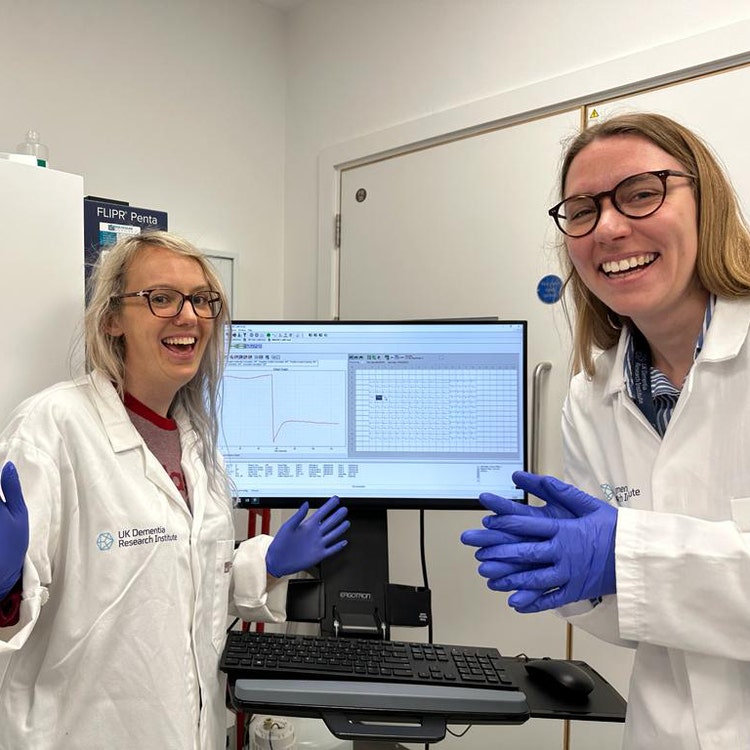
SUCCESS STORY
Dementia Research Institute at Cardiff University uses the FLIPR Penta System to study the role of microglia in Alzheimer’s disease

Applications of FLIPR Penta High-Throughput Cellular Screening System
Specifications & Options of FLIPR Penta High-Throughput Cellular Screening System
Resources of FLIPR Penta High-Throughput Cellular Screening System
FLIPR Penta High-Throughput Cellular Screening System
LED Modules and Emission filter accessories are available for both versions of the FLIPR Penta or Tetra instrument for Calcium sensitive dyes, Membrane Potential dyes, Voltage Sensor dyes and other applications.
Please follow this link to a .pdf of the wavelengths and ordering information
1. Please contact your local Molecular Devices Sales Representative for details regarding this configure to-order item.
FLIPR Cycler and Robotic Integration
