

Axon Digidata 1550B Low-Noise Data Acquisition System plus HumSilencer
High-resolution, low-noise digitizer with 50/60 Hz line-frequency noise elimination
The digitizer that enables acquisition of patch-clamp data
The Axon™ Digidata® 1550B plus HumSilencer® is one of the most advanced analog-to-digital signal converters on the market, offering the innovative line synchronous noise-cancelling feature, HumSilencer. This advanced feature learns, adapts, and eliminates local 50/60 Hz line-frequency noise and high-frequency harmonics from incoming signals. The digitizer works with pCLAMPTM 11 Software for data acquisition and analysis. The software supports eight channels of analog acquisition and four acquisition modes.

Eliminate line-frequency noise
HumSilencer removes 50/60 hz line-frequency noise on up to four channels in parallel. The function is quickly enabled through a software checkbox.

Record high resolution traces
All eight analog input channels can be simultaneously digitized at an impressive sampling rate of 500 kHz per channel.

Digitize cellular network studies
With Digidata 1550B system, you can now record cellular networks without 50/60 Hz line-frequency noise in a single digitizer while saving money, time, and reducing hassle.
Introducing the Axon Digidata 1550B Low Noise Data Acquisition System plus HumSilencer
Features

50/60 hz noise cancellation
HumSilencer is an advanced feature that learns, adapts, and eliminates local 50/60 Hz line-frequency noise patterns and associated high-frequency harmonics from incoming signal up to 20 V peak-to-peak.

Noise canceling
HumSilencer is not a filter and has no effect on acquired signals. It causes no signal distortion such as frequency change, amplitude attenuation, phase shift, or DC voltage change.

Wide range of input signals
Digidata 1550B digitizes a wide range of input signals from -10 to +10 V.

HumSilencer adaptation
HumSilencer automatically recognizes changes in noise amplitudes and adapts by removing noise in less than one second.

Optimized for pCLAMP 11 Software
The pCLAMP Software suite is the most widely-used patch-clamp electrophysiology data acquisition and analysis program for control and recording of voltage-clamp, current-clamp, and patch-clamp experiments.

Three configurations
Three configurations are available: Digidata 1550B4 with four HumSilencer channels, Digidata 1550B1 with one HumSilencer channel, and Digidata 1550B0 without a HumSilencer channel.
FAQ
What are the advantages of Digidata 1550B?
The Digidata 1550B comes with HumSilencer options. Depending on the model, it allows you to get rid of the line-frequency noises, also known as 50/60Hz noises, for up to 4 analog input channels. In addition, the Digidata 1550B offers a sampling rate of up to 500kHz and 8 analog output channels.
How do I use the Digitizer/Clampex software to control external devices?
Our digitizer uses digital outputs to control external devices, which could include a stimulus isolator, LED lights, perfusion system, etc. The digital output channel sends out a 5V TTL signal and controls the external devices. For example, you could connect a BNC cable from one of the digital output channels to the trigger input of a stimulus isolator. In Clampex software, you would then enable the digital outputs in the waveform tab. Each digit in the digital bit pattern corresponds to one of the digital output channels. Use “1” to turn on the corresponding channel and use “0” to turn off the corresponding channel.
How can we control HumSilencer?
The HumSilencer feature is integrated into the Digidata 1550B series and can be enabled or disabled using the CLAMPEX software.
When using the HumSilencer, is the raw data also saved?
Yes, but you need to split the acquired signal from the amplifier into two analog input channels in the digitizer. The data digitized in the analog input channel without HumSilencer integrated is raw data.
Can we use HumSilencer with episodic simulation protocols?
Yes, it can be used in both episodic stimulation and gap-free protocols.
How do I know how many HumSilencer channels my Digidata 1550B supports?
A sticker on the rear panel of the instrument indicates how many Adaptive Noise Cancellation (ANC) channels the instrument has. This will indicate how many, if any, HumSilencer channels the unit supports.
This information can also be found in Clampex software after the software recognizes the digitizer. Go to the ‘Configure’ tab and select ‘Digitizer’ in the Clampex software. The number of HumSilencer channels is listed in the configuration after the digitizer model is scanned.
Latest Resources
Featured Applications
Customer Breakthrough

SUCCESS STORY
University of Michigan use our Axon instruments to investigate NMDAR receptor blockers
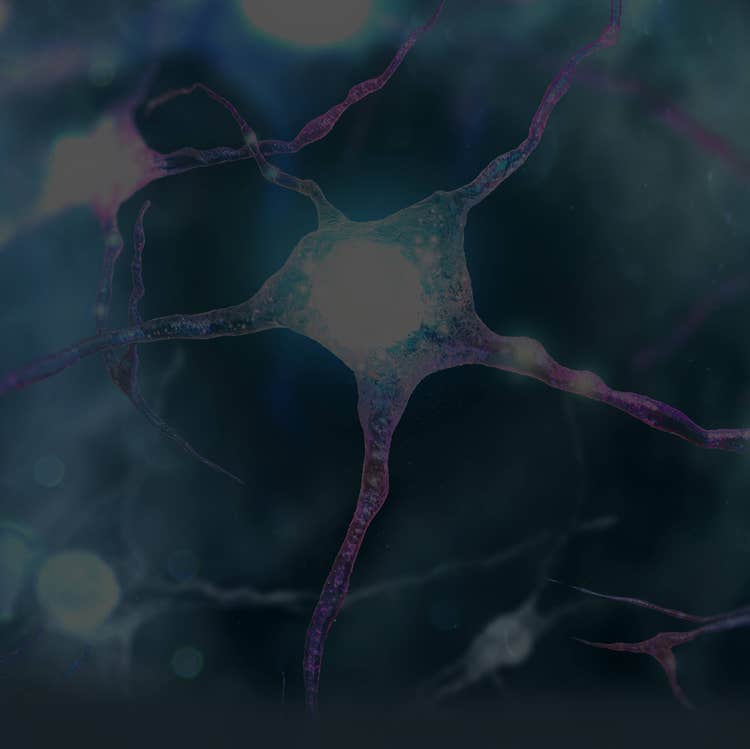
Applications of Axon Digidata 1550B Low-Noise Data Acquisition System plus HumSilencer
Specifications & Options of Axon Digidata 1550B Low-Noise Data Acquisition System plus HumSilencer
Download Data Sheet

Resources of Axon Digidata 1550B Low-Noise Data Acquisition System plus HumSilencer
Axon Digidata 1550B Low-Noise Data Acquisition System plus HumSilencer
Headstages
Electrode holders, adapters, and holder components
Model Cells
Cables
Miscellaneous